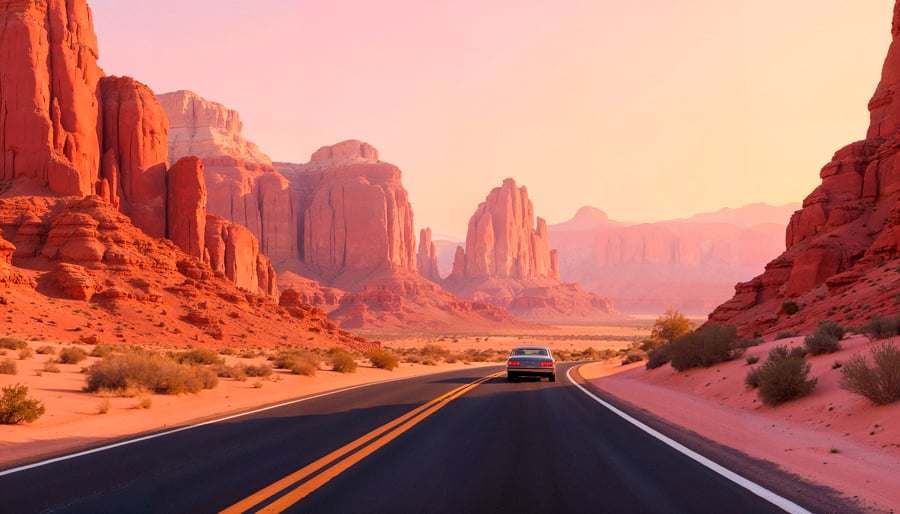
Every week, Southern California drivers pack up and head east.
Phoenix, Sedona, and Scottsdale are familiar escapes from Orange County traffic. The route feels simple, almost routine. Open highways, less congestion, and long stretches where you can finally relax behind the wheel.
But that’s exactly where things start to change.
Because once you cross into Arizona, the driving experience shifts in ways that many Californians don’t expect, and those differences can turn a smooth trip into a stressful one pretty quickly.
Less Traffic, More Speed
The biggest change hits almost immediately. Traffic drops. Roads open up. And speeds climb.
Arizona highways are built for long-distance travel, and without the constant congestion of Southern California, it’s easy to drift above your usual pace without even noticing it.
With less traffic and fewer interruptions, drivers tend to relax more behind the wheel. You’re not braking as often, not scanning as actively, and it’s easy to stop checking your speed as closely.
A few simple adjustments can make a big difference:
- Check your speed more often than you normally would
- Leave more space between you and the car ahead. Stopping distances should be increased at higher speeds
- Use cruise control carefully, especially on long, empty stretches
- Stay alert during transitions, like entering busier areas near cities
The road may feel smoother, but staying intentional with your driving habits helps you avoid small mistakes that can escalate quickly at higher speeds.
Long Desert Stretches Catch Drivers Off Guard
In Orange County, you’re used to quick exits, gas stations on every corner, and help never too far away. That’s not always the case in Arizona.
Once you’re outside major cities, keep in mind that gas stations can be spaced far apart, and services may close earlier than expected
We’ve seen drivers push their luck on fuel, assuming the next stop is just a few miles away. In the results, they find themselves stuck on a quiet stretch of highway.
Planning ahead matters more than you think on this route.
Headlight Rules Change Sooner Than You Think
This is something many California drivers don’t realize. Both California and Arizona require headlights when visibility drops, but the threshold isn’t the same.
In California, it’s about 1,000 feet of visibility. Arizona headlights laws set it closer to 500 feet, which means drivers may delay turning their lights on simply out of habit. The problem is, desert conditions don’t always give you much warning.
If visibility starts to fade, the safest move is simple:
- Turn your headlights on early
- Don’t wait until it feels fully dark
- Make sure your vehicle is clearly visible to others
Relying on what you’re used to in California can leave you reacting too late, especially on open highways where speed and low lighting make visibility even more critical.
Fatigue and “Highway Hypnosis” on Long Desert Roads
Arizona highways have a certain rhythm to them, with long, straight stretches with minimal traffic and very little interruption.
At first, it feels relaxing. But over time, that same consistency can work against you.
Drivers often zone out without realizing it, miss small changes in traffic, or lose track of time and distance.
This is sometimes called “highway hypnosis,” which is a state where you’re technically driving, but your awareness is reduced.
It doesn’t mean you fall asleep. It means your reaction time slows, and you’re less prepared for something unexpected like sudden braking, debris, or a vehicle merging ahead.
And the tricky part is, most drivers don’t notice it happening. That’s why even if you feel fine, planning a quick stop can reset your focus more than pushing through another hour of driving.
Desert Heat Adds a Different Kind of Strain
Then there’s the heat, which hits differently in Arizona. Even with the AC running, prolonged exposure to high temperatures can increase fatigue, reduce concentration, and dehydrate you faster than expected.
Your car feels comfortable, but your body is still working harder in that environment. Over time, that can lead to slower reaction times and mental fog, especially on longer drives. It’s a subtle effect, but it builds.
Staying hydrated, keeping the cabin cool, and taking short breaks out of the car can make a noticeable difference in how alert you feel behind the wheel.
Dust Storms Can Turn Visibility to Zero
This is one of the biggest surprises for California drivers.
Arizona’s monsoon season brings sudden dust storms, known locally as haboobs. They can roll in fast and completely block visibility.
If you hit one, the safest move is simple:
- Pull off the road
- Turn off your lights
- Wait it out
Continuing to drive, even slowly, can lead to chain-reaction crashes because other drivers may follow your lights without realizing you’ve stopped.
Wildlife Isn’t Just a Rural Problem
Another difference you don’t see much in SoCal is animals crossing highways. In Arizona, especially outside metro areas, drivers regularly encounter deer, coyotes, and smaller wildlife.
These incidents often happen at night or early morning, and at highway speeds, they can cause serious damage.
Navigation and Signal Gaps Are Real
Relying fully on your phone? That can be risky.
Certain areas in Arizona have weak or no cell signal, and GPS delays or dropouts
If you’re heading deeper into the state, it’s worth downloading directions ahead of time. Losing navigation mid-drive can leave you guessing on unfamiliar roads.
Before You Make the Trip
If you’re heading from Santa Ana or anywhere in Orange County toward Arizona, a few simple adjustments go a long way:
- Fill up your tank earlier than usual
- Plan at least one real break, even if you feel fine
- Stay alert as speeds increase
- Be prepared for changing conditions, especially in desert areas
That drive may feel easier, but it demands a different kind of attention.
And when you’re ready for it, it’s a much smoother trip from start to finish.
Make the Drive Easier on Yourself
That stretch between California and Arizona can feel long and fast. Breaking it up with even one of these stops can make the trip smoother and a lot less exhausting.
Because the goal isn’t just getting there, it’s getting there without feeling drained when you arrive. As a bonus, here are a few spots that are actually worth pulling over for:
Salvation Mountain (Near Salton Sea)
A colorful, hand-built desert art hill that feels completely out of place in a good way. Quick stop, great photos.
Bombay Beach
Just nearby, but totally different vibe. Think abandoned desert town meets outdoor art gallery. Strange, but memorable.
Painted Canyon (Mecca, CA)
A short detour for a quick hike through narrow slot canyons. Perfect if you need to wake up and stretch your legs.
Chiriaco Summit
More than a gas stop with quiet desert views and a small military museum if you want something different from the usual break.
Quartzsite, AZ
Right after the state line, this town has a quirky roadside feel, especially in winter, with markets and RV crowds.
Enjoy the Drive And Get There the Right Way
That trip from California to Arizona is one of those drives people look forward to for a reason. Open roads, changing scenery, and a break from the usual routine.
Take your time with it. Stay present, make a stop or two, and don’t let the “easy” feel of the road take your attention away from what matters.
A little awareness goes a long way out there. Drive safe, enjoy the ride, and arrive ready to actually enjoy where you’re going.
Copyright © 2026 California Business Journal. All Rights Reserved.
For California Business Journal Disclaimers, go to /terms-conditions/.


