
Carrying a baby for more than a few minutes often leads to shoulder strain, awkward strap adjustments, and concerns about safe positioning. Many traditional carriers force uncomfortable trade-offs between support and ease of use. Structured baby carriers address these issues by combining ergonomic design for healthy development with intuitive closures that allow quick, secure fastening—even one-handed. This guide explains why ergonomic features matter, key design elements, closure options, and how to choose and use a carrier effectively.
Why Ergonomic Support Matters
Ergonomic support in a baby carrier protects both parent and child. For babies, proper positioning supports healthy hip and spine development. The International Hip Dysplasia Institute recommends the “M-position,” where thighs spread around the parent’s torso, knees higher than the buttocks, and hips flexed naturally. This keeps the femoral head seated in the socket, promoting proper joint formation. For the spine, ergonomic carriers maintain a natural C-curve instead of forcing an upright posture before the baby is ready.
Parents benefit from reduced fatigue. A wide, padded waistband shifts the baby’s weight to the hips and pelvis—the body’s strongest load-bearing areas—rather than straining the shoulders and lower back. Crossed or connected shoulder straps help maintain upright posture, making it easier to carry for longer periods during walks, errands, or daily tasks.
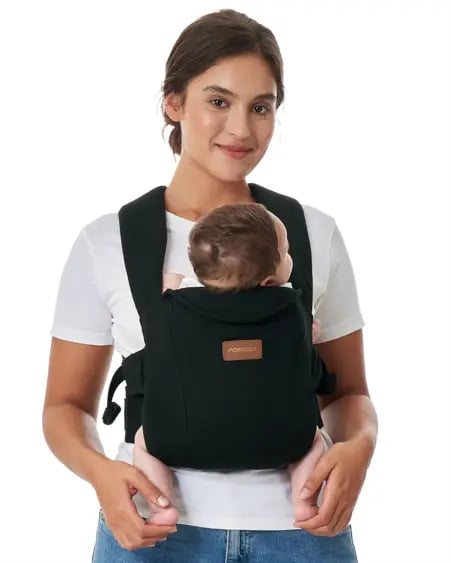 Design Features of Structured Baby Carriers
Unlike wraps or ring slings, structured carriers feature a defined body panel, integrated waistband, and pre-formed shoulder straps for consistent support. High-quality models use durable materials like ripstop nylon or canvas with high-density foam padding and mesh panels for breathability. Reinforced stitching at stress points ensures longevity, while safety certifications (such as ASTM or EN 13209) verify buckle strength and overall construction.
Adjustability is crucial for a customized fit. Look for ladder-lock buckles on shoulder straps, expandable waistbands (typically 25–50+ inches), and panel adjustments for newborns to toddlers. These features allow the carrier to adapt to different body types and growing babies without compromising ergonomic alignment.
Closure Systems for Quick and Secure Use
Easy closures make the difference between frustration and convenience.
- Buckles: Provide audible clicks and strong security. They are adjustable but may require practice for back-reaching.
- Snaps: Offer fast engagement with less dexterity needed, suitable for quick adjustments.
- Sling-style: Use rings and fabric for a customizable fit, though they require proper tensioning.
Practice with an empty carrier or stuffed toy first. Pre-adjust the waistband, keep the chest clip attached to one strap, and always check tension: two fingers should fit snugly under straps. Perform the T.I.C.K.S. safety check—Tight, In view, Close enough to kiss, Keep chin off chest, Supported back—before every use.
Step-by-Step Guide to Choosing and Using a Carrier
- Assess Needs: Consider your lifestyle, baby’s age, and climate. Newborns may need inserts or narrow-seat settings; older babies benefit from wider panels and outward-facing options. Prioritize wide adjustment ranges for multiple caregivers.
- Fit Properly: Fasten the waistband at your natural waist. Position baby in the M-position against your chest, pull up the panel, and adjust straps so their head is kissable. Check posture in a mirror—baby’s back rounded, airway clear, your posture upright.
- Daily Safety and Maintenance: Avoid use during cooking, cycling, or driving. Bend at the knees when reaching down. Spot-clean regularly and machine-wash gently per instructions (no bleach). Inspect buckles and stitching periodically.
Structured baby carriers combine ergonomic support with user-friendly designs to reduce discomfort and simplify babywearing. By focusing on proper hip/spine positioning, weight distribution, and intuitive closures, they enable longer, more comfortable bonding time. Evaluate options based on your specific needs, test the fit carefully, and maintain the carrier well for lasting use through multiple stages of your child’s growth.
Copyright © 2026 California Business Journal. All Rights Reserved.
For California Business Journal Disclaimers, go to /terms-conditions/.


