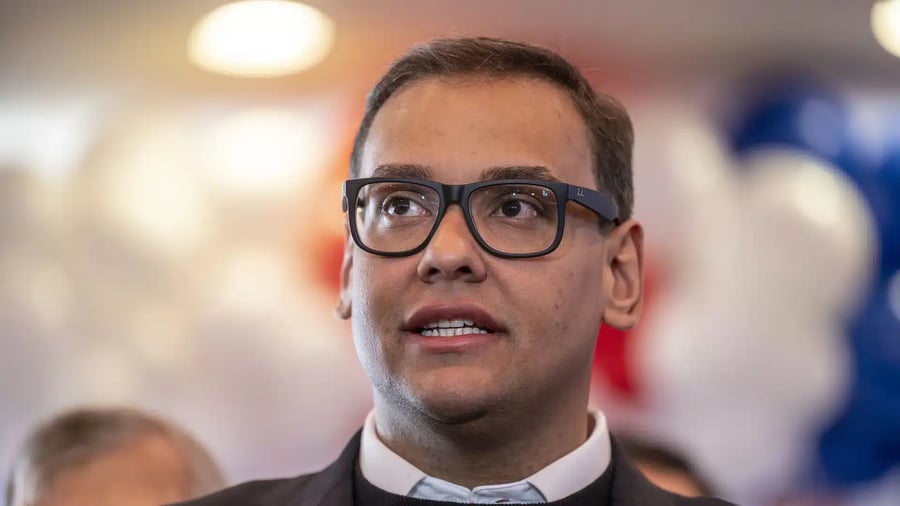
With sentencing set for April 25, former Congressman George Santos stands before a federal court not only as a convicted fraudster, but also as the author of his final chapter—for now.
His attorneys have asked for a 24-month sentence. Prosecutors want 87 months. And between those two figures lies the question of who George Santos really is—and whether the court believes he’s capable of change.
The stakes are high. In the government’s view, Santos’s “unparalleled crimes” weren’t just financial—they were corrosive to public trust and the democratic process itself. He fabricated degrees, professional experience, and campaign donors. Even after pleading guilty to wire fraud and identity theft last fall, prosecutors argue that Santos has remained defiant, calling the investigation a “witch hunt” and minimizing his conduct in a widely cited Rolling Stone interview.
Few understand how courts weigh these competing portrayals more intimately than prison consultant and sentence mitigation expert Dr. Marc Blatstein, who works closely with white-collar defendants preparing for sentencing and placement within the Bureau of Prisons.
“Judges have heard every excuse in the book,” Dr. Blatstein explains. “What they’re looking for is something deeper—honest insight into the harm caused, a willingness to change, and proof that the defendant understands how they got here.”
The Power—and Pitfalls—of Allocution
With sentencing imminent, Santos’s most impactful tool may be his allocution—the brief but consequential statement made directly to the judge. For many defendants, this is the first and only time they speak in their own voice, unfiltered by counsel or the media.
Dr. Blatstein describes allocution as a “make-or-break moment,” especially in high-profile cases like this one. “If it’s overly rehearsed, judges will sense it. If it’s self-pitying, it’ll backfire. But if it’s sincere, humble, and focused on others—not the defendant’s own downfall—it can shift the tone of the entire proceeding.”
Unfortunately for Santos, his track record since pleading guilty does not inspire confidence. The government’s sentencing memorandum describes him as unremorseful and manipulative, noting that he has not repaid his victims nor taken meaningful steps toward restitution. More damaging still is his media behavior: contradicting his own plea by calling his actions “resume embellishments” just months after admitting to fraud.
“Public statements matter,” says Dr. Blatstein. “They can undo the credibility a defendant tries to build in court. If there’s a disconnect between what you say in front of a judge and what you say to the press, that gap will be used against you.”
Mental Health as Mitigation—If Properly Presented
Santos’s defense team has pointed to a history of depression, suicidal ideation, and anxiety as mitigating factors—details that appear in the Presentence Report. They’ve also referenced a psychiatric hold at Elmhurst Hospital roughly a decade ago. But Dr. Blatstein is quick to caution that such claims, while potentially valid, must be supported by clear documentation and ongoing treatment plans to carry real weight.
“Mentioning mental health history without supporting medical records or input from a treating physician is a missed opportunity,” he says. “Courts don’t disregard these issues—but they need to be substantiated.”
Properly framed, these factors could influence not just the sentence itself but Santos’s placement within the federal prison system. Certain facilities are better equipped to address mental health needs, while others may offer programs aimed at reducing recidivism. But placement is not automatic.
“With ongoing staffing shortages and overcrowding, even medically appropriate placements can be delayed or denied,” Dr. Blatstein notes. “That’s why preparation—well in advance of sentencing—is essential.”
The Missing Narrative
Santos’s legal team has emphasized the nonviolent nature of his crimes and the reputational damage he’s already suffered. But the memorandum stops short of a broader personal narrative—one that might explain, if not excuse, how Santos unraveled into deception and self-destruction.
“A compelling narrative connects the dots,” says Dr. Blatstein. “Not just what the defendant did, but why—and what’s changed since then. Has the person done any real work on themselves? Is there a plan to make things right? These are the things that make a judge pause.”
Such a narrative could acknowledge not only the legal victims of his fraud, but the voters who were misled, donors who were manipulated, and colleagues who placed trust in a fabricated résumé. The absence of that wider lens in Santos’s defense, some observers argue, may leave the court with little reason to exercise leniency.
What Happens Next for George Santos
If the court adopts the government’s position, Santos could spend more than seven years in federal custody. If the defense prevails, he may return home in just two. But in either case, his final statement will likely influence where he is housed, how he is treated, and whether he has access to rehabilitative programs inside.
“The allocution is the only part of the process that’s truly his,” Dr. Blatstein says. “He can’t control what the prosecutors say, or how the public sees him. But in that moment, standing in front of the judge, he has a choice: be honest and accountable, or gamble with a future that’s already hanging by a thread.”
For more information about federal sentencing, prison placement, and white-collar mitigation strategies, visit Dr. Marc Blatstein’s Physician Presentence Report Service at PPRSUS.com.
Copyright © 2025 California Business Journal. All Rights Reserved.
For California Business Journal Disclaimers, go to /terms-conditions/.


