Commercial real estate developer SteelWave won the bid to revitalize the 3333 and 3343 Casitas property in Atwater Village in March 2020. The plan for Casitas, as it’s known today, was clear: transform a cluster of aging industrial warehouses into a vibrant creative campus that reflected Los Angeles’ evolving economy. The project, a $70 million investment backed by a $42 million loan, was meant to breathe new life into a part of the city long overdue for revitalization. Tenants such as Virgin Music and a promising biotech company saw the potential early on, drawn by the vision of a modern creative space built around collaboration and innovation. What could possibly go wrong?
How it Started
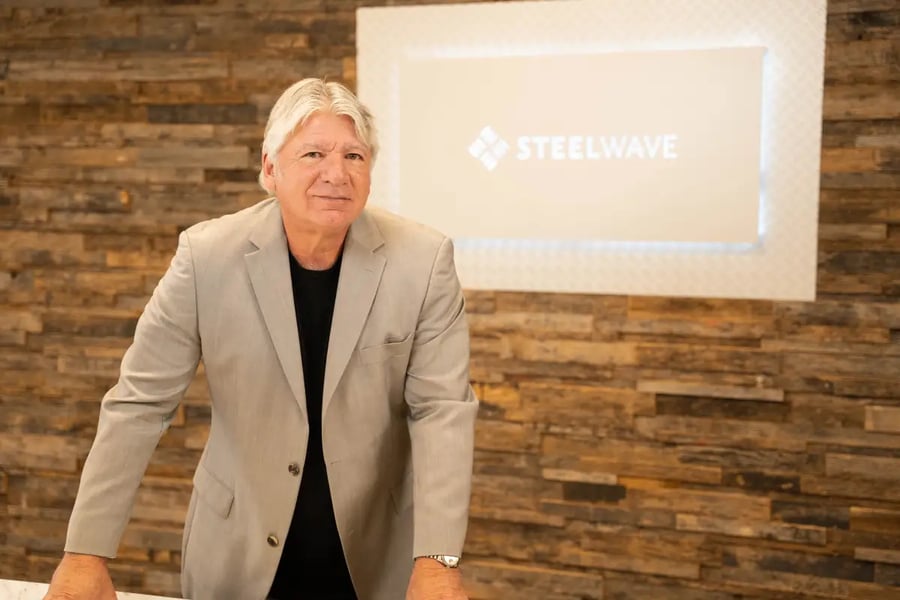
For SteelWave, Casitas was an opportunity to demonstrate how thoughtful adaptive reuse could serve as a catalyst for community and economic growth. Atwater Village, once an industrial suburb, is now a “media mecca” sandwiched between Burbank and Hollywood. SteelWave Managing Director Gregg Hall says he met actors, architects, and post-production folks walking along Casitas Avenue. “Our whole strategy with the Casitas development,” he says, “was to take obsolescence and not stick it in the landfill, but put our mark on it and make it a creative media canvas for those types of end users.”
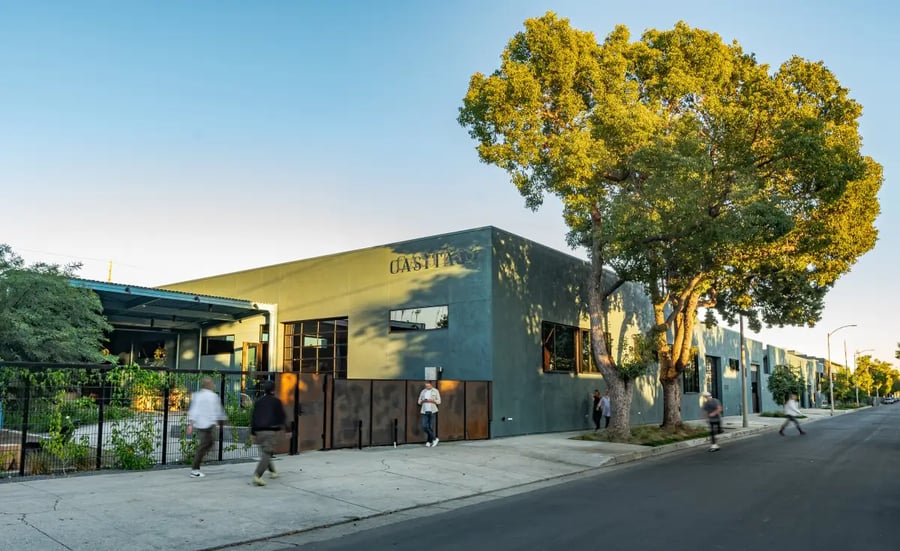
And they did. The resulting Casitas property is not only a beautiful, welcoming space, but it also preserves the historical vestiges of the custom glass facility it was previously, including the giant scale that weighed 10,000 pounds of glass. “We left the company's hand laid mosaic entryway. We peeled back roof systems, and we created these outdoor, lushly landscaped amenity areas,” Hall says. Like any real estate gem, it has looks and location. A prospective tenant CEO told them, “I can’t believe what you’ve done here.”
SteelWave also worked closely with residents to ensure the development would integrate into the existing fabric of Atwater Village. They sponsored the Atwater Elementary School District and the neighborhood’s Holiday event on Glendale Boulevard, and they even had bottles of Casitas-branded gin made with a woman-owned distillery in the area. “We wanted to do what was right for the neighborhood, and we wanted them to support us,” Hall says.
As the pandemic wore on, one of their contractors urged them to buy switchgear, the big panels that sit in an electrical room, early on to avoid shipping delays, as parts were needed from Mexico, Canada, and parts of Asia. A power source was needed, but since there were power poles in front of the building and along the street, they assumed this wouldn’t turn into a multi-year ordeal. They submitted their plans to connect to the city's power lines in June of 2021.
They received their permit on January 20, 2026. Four years and seven months later.
A City Stuck in Its Own Red Tape
The permit was submitted to the Department of Water and Power (LADWP). The agency continued to manufacture reasons for the four-year delay. The city never provided updates on its internal approval processes, nor did it update SteelWave on milestone timing.
At first, the holdup seemed like a short-term inconvenience. But as weeks turned into months, SteelWave hired ex-DWP employees to help move it along, and Burns & Bouchard to expedite the process. Their neighborhood liaisons in Atwater Village, the same who asked them to sponsor the elementary school, called their representatives. Hall himself submitted comments on the LADWP homepage for Janisse Quiñones, Chief Executive Officer and Chief Engineer of LADWP, multiple times (he received a reply only once, in which he was asked for a Job Number; he provided the requested information but never received an update). He called LA City Council member Hugo Soto-Martinez, and a junior staffer told him they would look into it. “Nothing happens,” Hall says. Months turned into years, and the delay turned into a crisis.

Without power, SteelWave couldn’t secure long-term tenants or finalize leases with major companies that had expressed early interest. The site gathered dust, community frustration grew, and SteelWave’s own costs mounted.
SteelWave and its investor, a real estate private equity firm, chose not to fund additional capital even after funding over $30M of equity into the project. The lender eventually placed the project into forbearance, assuming control of the asset, while SteelWave remained on the hook due to a completion guarantee. Millions of dollars in equity sat tied up in a project that couldn’t open its doors, not because of design flaws or lack of demand, but because the city’s permitting and infrastructure systems simply could not deliver.
Hall recalls that at one point, the utility’s approach seemed almost opportunistic: the department announced it would upgrade all the power poles for the neighborhood's benefit. Which, in turn, shifted some of the cost to SteelWave. The situation grew even more convoluted when LADWP extended the upgraded power line several hundred yards past the Casitas property and then required SteelWave to connect at the new terminus, not at the pole directly outside its building. That seemingly simple shift triggered more time, revised drawings, and added layers of complexity.
When SteelWave’s team investigated the new connection point, they discovered abandoned SoCal Gas lines running along the very stretch where they needed to trench. “DWP said, ‘Oh, yeah, sorry about that. Go call them. You have to make sure they quit claim their deed to those gas lines before you can remove them,” Hall recounted, adding that this detour alone took six months. After finally securing the quitclaim, the company was told that because the trench had now become a major infrastructure job, it had to go back to the city’s Bureau of Engineering and planning department for approval, complete comprehensive shoring drawings, and submit a detailed safety plan, requirements never contemplated when the team expected a straightforward pole connection in front of the building.
Only after the Bureau of Engineering stamped the plans, SoCal Gas signed off, and LADWP added its own approval did the project clear that hurdle.
Even then, Hall noticed something telling: the plans he received on a Tuesday in January bore a November date. “There’s simply no urgency or accountability,” he said.
“Fifty percent of the time, when we would email our contact, we got an ‘out of office.’ It was incredible how many out-of-office messages we received.”
Hall notes that Casitas is not an isolated case. Nearby in Echo Park, a 300-unit apartment community that includes an affordable housing component for teachers, police officers, and other essential workers, ran into nearly identical utility hurdles. There, too, extreme delays were encountered, and key personnel cycles like paternity leave effectively stalled progress for months, stretching what should have been routine coordination into a prolonged ordeal.
For Hall, the point is larger than any single project: these were not luxury-only developments catering exclusively to high-end tenants, but mixed and workforce housing that the city says it wants, serving residents who should be able to live in Los Angeles rather than commute from hours away.
The Human and Financial Toll
While the Casitas delay is a story of financial strain, it’s also one of personal frustration.
In 2025, Hall lost his home in the Palisades fire. He built the home and lived in it for less than 10 years. He, his wife, and three children lost everything.
“They (the city of Los Angeles) were planning on charging all these homeowners permitting fees to rebuild their houses that burned down. You know, largely or even partly at the negligence of agencies... Fire hydrants were empty halfway through the fire because the reservoirs were empty and fire trucks were idling on PCH. So it really angers me.”
After the fire, Hall recounted, the city promised to fast-track rebuilding permits for victims, but many of those same agencies were the cause of the problem in the first place. That lack of accountability is exactly what developers face every day in Los Angeles.
At Long Last, Progress?
With permits in hand, the focus now shifts to leasing and stabilization. Cushman & Wakefield has taken over tenant outreach, showing the renewed space to entertainment, media, and life sciences companies attracted by the creative-industrial blend. A well-known media outlet was among the early groups to tour the site post-permitting, signaling renewed market momentum.
Even so, the scars of delay remain. The forbearance agreement means the lender holds control, and the delay has cost Los Angeles far more than lost rent or taxes. It dampened enthusiasm in an industry already bruised by high interest rates, shifting office needs, and post-pandemic uncertainty.
And then there’s the Mansion Tax. “The Mansion Tax hits us, too,” he says. “In all of the tens of millions of dollars that we have lost, when this asset sells, somebody is paying the Mansion Tax. So we can lose $50 million, and we’ll have to pay 5.5% to the city that caused the loss. That doesn’t make sense to me.”
For all the frustration surrounding Casitas, the experience underscores a widening gap between Los Angeles and other regional markets where SteelWave operates. Just an hour south, in Orange County and San Diego, new developments are welcomed with open arms.
Hall also points to SteelWave’s successful projects in places like El Segundo as proof that efficiency and creativity can coexist. When the city is a partner, not an obstacle, great things happen fast.
Moving Forward
The Casitas saga may yet have a positive ending. The buildings that sat idle through years of delay will soon begin the electrification process, which will take about six months. They will welcome new tenants, and the Atwater Village community will finally see the creative campus it was promised. But SteelWave’s experience serves as a critical reminder of what’s at stake when bureaucracy outweighs progress.
Los Angeles prides itself on being an innovation capital, a place where the entertainment, tech, and bioscience industries thrive. Yet, if the city cannot modernize the very processes that support that ecosystem, it risks watching opportunity flow south to counties and cities that already have.
For now, SteelWave is moving on, with lessons learned and eyes set on regions that have refined what Los Angeles has yet to master: a permitting process that values time, respects investment, and keeps the city’s creative heart beating strong.
“If there’s one thing investors don’t like, it’s uncertainty. Developing in Los Angeles is a gamble,” Hall says. “And that uncertainty is what’s driving them away.”
Learn more about the Casitas project here: https://www.casitasla.com/
Note: A media inquiry was sent to the Los Angeles Department of Water and Power. They have not replied as of January 25, 2026.
Publisher's Note: Views expressed in comments and details in this article are solely those of SteelWave and do not reflect the views of the publisher. The publisher is not responsible for any damages resulting from these comments and this article.
Copyright © 2026 California Business Journal. All Rights Reserved.
For California Business Journal Disclaimers, go to /terms-conditions/.


