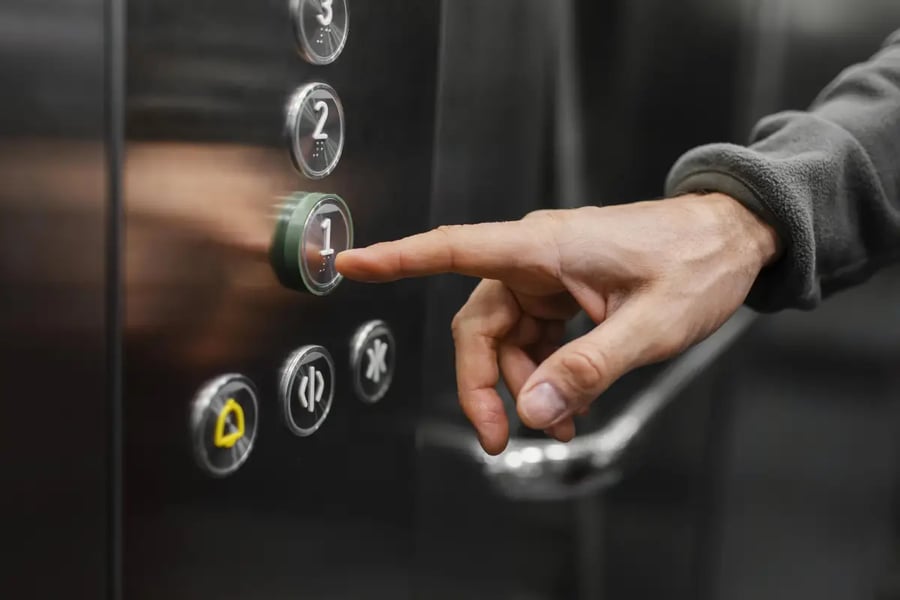
Elevators cease to be a luxury and are now a part of the modern building. It may be residential buildings or a commercial area, but a functional elevator is the one that directly impacts the experience and safety of users.
Being an owner of a building, a mere knowledge of the functioning of the elevator systems is not a technical load; it is a practical knowledge. It helps to make more favorable maintenance decisions, problem-solve, and reach the service providers more easily.
1. Core Mechanical Components in Elevator Systems
Any elevator is based on its mechanical structure. These factors relate to movement, load, and structural balance.
The most critical lift parts in this category include:
- Elevator Car – The cabin that carries passengers or goods
- Counterweight – Balances the car to reduce motor effort
- Guide Rails – Ensure smooth vertical movement
- Hoist Ropes / Cables – Connect the car and counterweight
- Machine (Motor) – Drives the elevator system
2. Electrical and Control Systems
Sophisticated elevators are dependent on smart systems. These parts guarantee accuracy, safety, and efficiency.
Key elements include:
- Control Panel – The brain of the elevator system
- Drive System (VFD) - Regulates speed and acceleration.
- Sensors: Check the position, load, and door movement.
- Wiring and Power Supply - Keep a steady flow of electricity.
In their absence, the elevators would not have accuracy and safety coordination.
3. Safety Components You Can’t Ignore
Safety is the key aspect of any elevator system. These sections are constructed to avoid accidents and as per the regulations.
- Governor → used in elevators to detect overspeed of the lift car
- Safety gear → emergency braking system for an elevator cabin
- Buffers → installed at the bottom of an elevator shaft to absorb impact
- Door interlocks → prevent elevator doors from opening while moving
- Emergency brake system → safety mechanism in case of system failure
These are all standard elevator safety components, not automotive parts.
4. Elevator System Overview Table
| Component Category | Key Components | Primary Function |
| Mechanical System | Elevator car, counterweight, hoist ropes | Ensures smooth movement and proper load balancing |
| Electrical System | Control panel, sensors | Manages operation, control, and automation of the elevator |
| Safety System | Governor, braking system, buffers | Provides passenger safety and prevents accidents |
| Door System | Door operator, rollers, sensors | Controls door opening, closing, and entry/exit operations |
5. Why Building Owners Should Understand These Parts
Having a working knowledge of elevator systems offers real advantages:
- Helps identify early warning signs of failure
- Improves communication with maintenance teams
- Reduces unnecessary repair costs
- Ensures compliance with safety standards
- Minimizes downtime and tenant complaints
You don’t need to be an engineer—but knowing the basics gives you control.
Regular Maintenance: The Key to Long-Term Elevator Performance
Maintenance is also a significant aspect in ensuring the safety and efficiency of elevators. Regular checks are used to identify minor problems before they become expensive to repair. Timely replacement of worn out parts, lubrication and cleaning are good to enable smooth operation.
To the building owners, regular maintenance is not only cost effective in prolonging the life of the elevator, but also enhances reliability and satisfaction by the user.
Conclusion
Elevator systems can be complicated to understand, yet the system is constructed with a set of well-defined parts in collaboration. Once the owners of such buildings are aware of these essentials, then the maintenance will be proactive and not reactive.
In general, understanding of the important lift parts not only contributes to the safety but also to the maximum life of the entire system.
Key Takeaways
- Elevator systems are made up of mechanical, electrical, safety, and door systems.
- Each part plays a specific role in performance and safety.
- Door systems are the most frequently serviced components.
- Safety mechanisms are essential for regulatory compliance.
- Understanding elevator basics helps reduce long-term costs.
Copyright © 2026 California Business Journal. All Rights Reserved.
For California Business Journal Disclaimers, go to /terms-conditions/.


