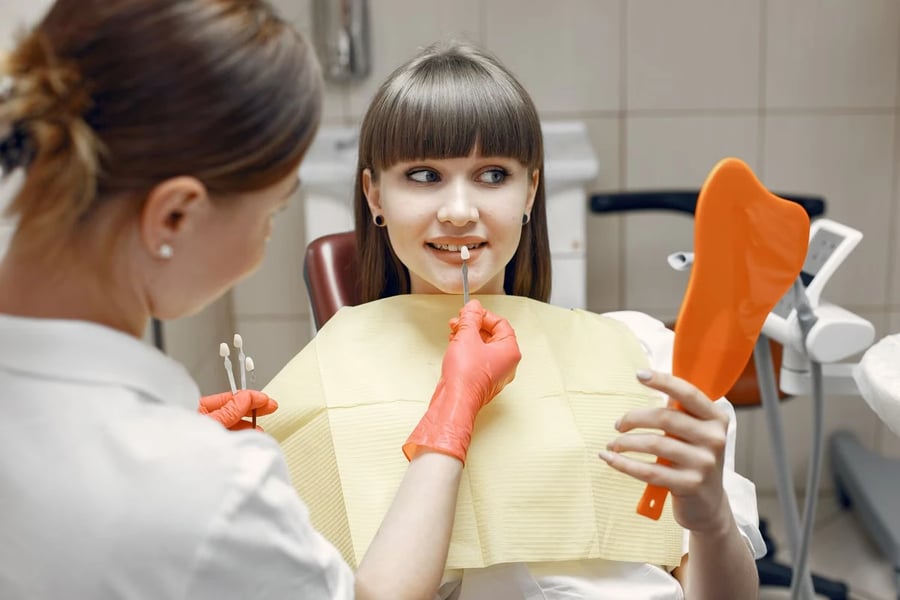
A polished smile depends on more than tooth color. Shape, proportion, alignment, surface texture and the relationship between the teeth and gums all influence how balanced a smile appears. For some patients, professional whitening may be enough to improve discoloration. For others, brighter teeth can make chips, gaps, worn edges or uneven tooth size more noticeable. Because whitening and veneers address different concerns, treatment planning should focus on the features actually affecting the smile.
Cosmetic dentistry increasingly emphasizes subtle, individualized improvements rather than dramatic changes. A dentist may recommend whitening, veneers or a combination of treatments. The goal is not simply to make teeth as white as possible, but to create visual consistency while preserving healthy tooth structure. Natural shade, enamel condition, facial features and existing restorations can all affect the plan.
What Professional Teeth Whitening Can and Cannot Change
Professional teeth whitening mainly changes color, not tooth structure. Whitening agents reduce certain types of discoloration and can be effective for stains associated with coffee, tea, red wine, tobacco and age-related darkening. Results vary depending on enamel thickness, dentin color, previous dental work and the cause of staining. A dental examination can help determine whether discoloration is likely to respond well.
Tooth discoloration can occur alongside worn edges, uneven shape, spacing or surface damage, so whitening is not always the only treatment worth considering. For patients comparing cosmetic options, an evaluation that considers both color and tooth structure can help clarify which treatment is most appropriate. Union Square Dental Practice is one example of a practice that takes this broader view, offering professional whitening treatments for suitable cases of tooth discoloration in San Francisco, as well as custom veneer options to improve tooth shape, color, and overall symmetry, when structural concerns or resistant stains are also present. Reviewing both options together can help patients avoid unnecessary treatment and focus on the specific features affecting their smile. The result can be a more balanced approach that supports both appearance and preservation of healthy tooth structure.
Whitening cannot close gaps, repair chips, lengthen short teeth or correct significant asymmetry. Crowns, veneers, bonding and many tooth-colored fillings also do not whiten like natural enamel, which can create a mismatch. Internal stains related to trauma, medication exposure or developmental conditions may respond less predictably. Whitening is therefore most suitable when the teeth are healthy and the main concern is color.
Where Dental Veneers Fit Into Cosmetic Treatment
Dental veneers are thin restorations placed over the visible front surfaces of teeth. They can change color, shape, size and apparent position, making them useful for worn edges, small gaps, minor fractures, disproportionate teeth and stains that do not respond well to whitening. Unlike whitening, veneers can address several cosmetic concerns at once.
A well-designed veneer should blend with neighboring teeth rather than appear artificial. Variations in translucency, texture and contour can help restorations resemble natural enamel. However, veneers require a greater commitment. In some cases, a small amount of enamel must be removed, and that preparation may be irreversible. Patients with decay, gum disease, inadequate enamel or heavy grinding habits may need those issues treated first.
Choosing Between Whitening, Veneers and Combined Treatment
The key question is whether the main concern involves color or structure. If teeth have pleasing proportions but appear yellow or stained, whitening may provide enough improvement with little alteration. If the concern involves shape, spacing, damaged enamel or resistant discoloration, veneers may offer more control.
Some patients benefit from both. Whitening is often completed first because natural teeth can be lightened, while veneer shade is selected during fabrication. After the whitening result stabilizes, new restorations can be matched to the surrounding teeth. A combined plan does not require veneers on every visible tooth. Conservative treatment may involve whitening most teeth and placing veneers only where structural correction is needed. Bonding, contouring or orthodontics may sometimes further reduce the number of veneers required.
Planning for Natural-Looking Results
Cosmetic treatment should begin with an evaluation of tooth health, gum condition, bite, existing restorations and available enamel. Photographs, digital scans or radiographs may be used when appropriate. Facial proportions also matter: tooth width and length, gum display and the relationship between the teeth and lips all influence appearance.
Communication is especially important before veneers. Terms such as “natural,” “bright” or “straight” can mean different things to different people. Digital previews, mock-ups or provisional restorations may help clarify expectations before irreversible treatment.
Shade and translucency also deserve attention. Natural teeth are not one flat color; they contain variations in opacity and translucency. Whitening preserves much of this character because it changes the existing tooth, while veneers must reproduce it through material choice and design. Proportion matters as well, since restorations that are too long, square or uniform may look unnatural even if their shade is attractive.
Maintenance, Longevity and Risks
Neither option is maintenance-free. Teeth can gradually stain again after whitening, so occasional touch-ups may be needed. Whitening can also cause temporary sensitivity or gum irritation, especially in patients with exposed roots or untreated dental problems.
Veneers can last for years but may eventually chip, loosen, fracture or require replacement. Gum recession, bite changes and new dental disease can also affect them. Patients should therefore view veneers as a long-term restorative commitment rather than a one-time cosmetic procedure.
Daily oral hygiene remains important. Brushing, interdental cleaning and regular dental examinations help protect the teeth and gums. Patients who grind their teeth may need a night guard, while habits such as chewing ice or biting hard objects can damage restorations.
Creating a Polished Smile Conservatively
The most natural cosmetic results are often subtle. A polished smile does not require every tooth to be identical or extremely white. For many patients, a staged approach works well: whitening can be considered first when discoloration is the main concern, followed by reassessment. If shape, spacing or surface problems remain, targeted bonding, contouring, orthodontics or veneers can then be considered.
Ultimately, whitening is designed mainly to change natural tooth color, while veneers can change both color and form but require a greater restorative commitment. Careful examination, realistic expectations and attention to long-term maintenance can help patients choose treatment that improves appearance while preserving healthy tooth structure.
Copyright © 2026 California Business Journal. All Rights Reserved.
For California Business Journal Disclaimers, go to https://calbizjournal.com/terms-conditions/.


