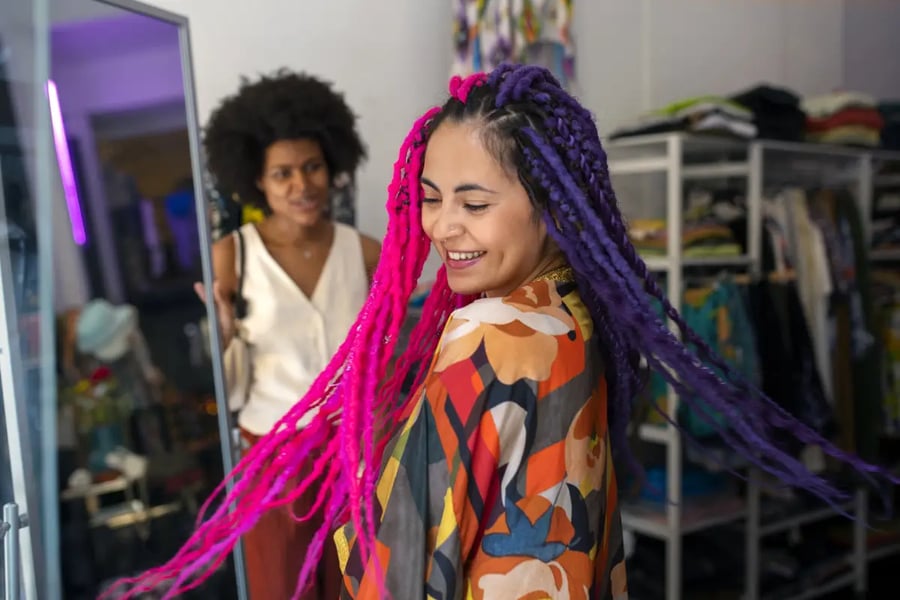
Crochet hair extensions have earned their place as one of the most practical protective styles available today. The method is accessible, cost-effective, and easy to learn without professional training. Even so, a surprising number of beginners end up with slipping extensions, thinning edges, or an install that falls apart within a week. In almost every case, the root cause is a misstep during preparation or application, not the hair itself. Catching those errors early changes everything.
The Foundation: Braiding Pattern Matters Most
Most beginners braid straight back in clean, uniform rows, which feels logical but often produces flat, one-dimensional results. A brick-lay or circular pattern works far better because it distributes volume more evenly and supports natural movement. The braiding direction should follow the intended parting, not convenience.
Keep Braids Uniform and Secure
Tension matters as much as direction. Braids that are too loose allow extensions to shift within the first few days; braids that are too tight strain the scalp and increase breakage risk. Size consistency is equally important. Oversized braids leave visible gaps, while undersized ones make the crochet needle difficult to work with during application.
Choosing the Right Hair and Quantity
Fiber type, texture, and weight all affect how extensions perform once installed. Many beginners overlook these factors and purchase hair based on appearance alone, then wonder why the finished style looks off. Texture mismatch between the extension and natural hair is one of the most common reasons an install reads as artificial.
Before purchasing, taking time to compare options carefully is worthwhile. A well-organized selection of crochet hair extensions allows beginners to evaluate different textures, lengths, and curl patterns side by side, making it easier to find something that genuinely complements their natural hair. Choosing a close match in texture creates a finish that looks deliberate and cohesive.
How Much Hair Is Enough
Six to eight packs is a reliable starting point for a full, medium-density style. Tighter curl patterns compress after installation, so they typically require more packs to achieve adequate volume. Straighter textures use fewer packs but can appear thin if underpacked.
The Crochet Needle Technique
Improper use of the latch hook causes more installation failures than most beginners realize. Inserting the needle at an inconsistent angle, or hooking unevenly through the braid base, produces knots that loosen with daily movement and styling.
Proper Knotting Method
The slip knot is the standard, reliable method for securing each extension. Fold the extension hair in half, insert the latch hook under the braid, draw the folded end through, then pull both tails through the resulting loop. Tighten with a firm, steady pull. Practicing this motion on a loose test braid before starting the full install builds consistency and prevents the trial-and-error frustration that slows down many first installs.
Edge and Scalp Care During Installation
The hairline is often the last thing beginners think about and the first thing that shows damage. Braiding the perimeter at the same tension as the rest of the head puts unnecessary stress on already fine edge hair. The first row of braids should always be slightly looser than interior rows to protect that area.
Moisturize Before You Start
A lightweight moisturizer or hair oil applied before braiding reduces friction and keeps the scalp comfortable throughout a long install session. Dry hair breaks more easily at the braid stage, especially along the nape and temples, where the hair tends to be thinner. Hydration is a preparation step, not an afterthought.
Finishing and Blending
Even a technically correct install can look rough without proper finishing. After securing all extensions, trim uneven ends while the hair is dry rather than wet to avoid cutting more than intended. Using a diffuser or steamer sets the style and softens any stiffness in the fiber. Gently lifting the roots with a pick helps disguise the braid base and adds the natural volume that makes an install look lived-in rather than just placed.
Conclusion
Getting crochet extensions right is less about talent and more about knowing which steps really matter. The braiding foundation, knotting technique, hair selection, and edge care collectively determine how long the style lasts and how well it holds up under daily wear. Taking the time to practice each stage before committing to a full install is the single best thing a beginner can do. Done correctly, this protective method delivers results that look intentional, stay secure, and keep natural hair healthy throughout the wear period.
Copyright © 2026 California Business Journal. All Rights Reserved.
For California Business Journal Disclaimers, go to /terms-conditions/.


