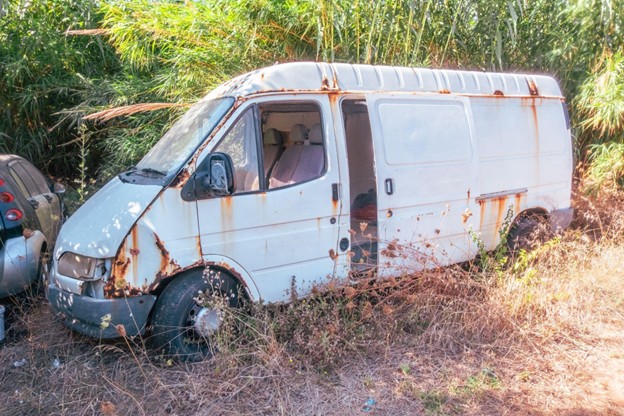
A junk RV in California can turn into a daily headache faster than most people expect. Between storage costs, neighborhood rules, parking restrictions, and the stress of “maybe I’ll fix it someday,” the RV quietly becomes a project that drains time and money. A quick exit strategy is not about giving up. It is about cutting losses, clearing space, and choosing a sale route that matches the RV’s real condition.
Step 1: Choose Speed Over “Someday”
If your RV has a soft roof, persistent leaks, a dead engine, or systems that only work when they feel like it, the slow path gets expensive. Craigslist-style listing cycles can mean weeks of questions, no-shows, and awkward meetups, especially when the rig is clearly not road-ready. The simplest way is to sell your junk RV in California with HeyRV, so you don't spend your weekends defending a vehicle that needs more than a tune-up.
This is the mental shift that saves the most time: stop treating the RV like a future renovation and start treating it like an asset you are ready to liquidate. The moment you decide “I’m done,” everything gets easier, because your next steps become about paperwork, pickup logistics, and price reality, not fantasy repairs.
Step 2: Identify What’s Actually “Junk” in California Terms
In California, “junk” is less about appearance and more about practicality and compliance. A rig can look decent and still be a junk RV if it cannot pass a basic safety check, cannot be legally moved without major work, or has water damage that will keep spreading. Buyers also factor in whether the RV has been sitting, whether the tires are dry-rotted, and whether mold or rot is likely behind the walls.
Be honest about the deal-breakers so you do not waste time chasing the wrong buyer. If the RV has a blown transmission, missing catalytic components, a non-functioning electrical system, severe roof damage, or a title issue that will take months to sort out, traditional buyers will either walk away or negotiate aggressively. The fair move is to sell it as-is and price it as an exit, not as a “starter RV.”
Step 3: Get Your Paperwork Straight Before Anyone Shows Up
Paperwork is where many California RV sales stall. A clean title and matching VIN save you days of back-and-forth, and they protect you from last-minute excuses. If you have the title, registration, and any lien release, gather them now. If the RV was inherited, purchased without proper transfer, or lost in a paperwork pile, your fastest route may be to resolve what you can and choose a sale option that can still work with imperfect documentation.
Also, think about where the RV is parked. If it is in a storage facility, confirm their release rules and office hours. If it is on a street with frequent enforcement, street sweeping schedules, or neighbor complaints, plan your timing so you are not racing a tow warning. In California, the “cost” of waiting often shows up as tickets, storage fees, or pressure from an HOA, so paperwork and logistics matter as much as the sale itself.
Step 4: Stop Spending Money “To Make It Sellable”
When repairs stack up, it is easy to fall into the trap of “just one more fix.” But junk RV math is harsh: a few thousand dollars on roof work, tires, batteries, and appliances rarely returns what you put in, especially if hidden water damage is still there. When selling an RV you already consider junk, your best leverage is speed and transparency, not upgrades.
A smarter approach is to spend only on what prevents delays. Clear out personal items, remove trash, and document obvious issues in simple terms. Take a handful of clear photos in daylight, including the roofline, tires, interior corners, and any damaged areas. Your goal is to reduce surprises so you get a real offer without repeated showings or arguments.
A Quick Exit Is a Clean Decision
California makes it easy for a neglected RV to become expensive, even if it never moves. The quick exit strategy is straightforward: commit to selling as-is, match your buyer option to the RV’s condition, handle paperwork early, and avoid throwing good money after bad. That path protects your time and turns a problem vehicle into progress.
If you are ready to stop managing a broken rig, take the direct route and treat the sale like a simple transaction, not a long-term renovation.
Copyright © 2026 California Business Journal. All Rights Reserved.
For California Business Journal Disclaimers, go to /terms-conditions/.


