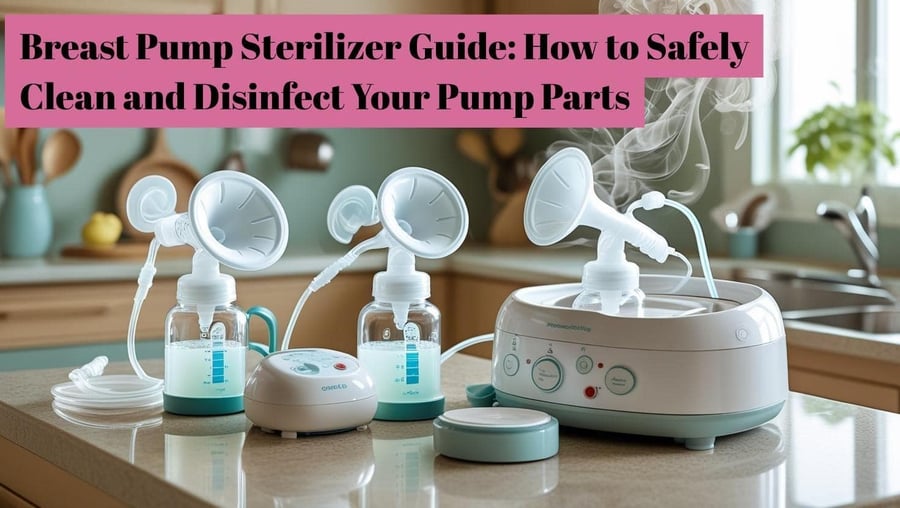
Keeping your breast pump sterilizer clean is essential for your baby's health and safety. When milk residues are left behind, they can quickly become breeding grounds for bacteria, increasing the risk of contamination. Proper cleaning routines help maintain a hygienic pumping environment and preserve the nutritional quality of your breast milk.
Regular sterilization, in addition to basic cleaning, offers an added layer of protection—especially for newborns or babies with weaker immune systems. In this guide, you'll learn how to thoroughly clean and sterilize your breast pump parts step by step, ensuring your baby receives only the purest nutrition.
Before You Begin Pumping
Before using your breast pump for the first time, it's essential to sterilize all parts that come into contact with breast milk, such as bottles, valves, and breast shields. This initial sterilization ensures that any manufacturing residues or contaminants are eliminated. Always refer to the manufacturer's instructions for specific cleaning guidelines.
Cleaning Your Breast Pump After Use
After each pumping session, follow these steps to clean your breast pump parts:
- Disassemble: Separate all parts that come into contact with breast milk.
- Rinse: Rinse each part under running water to remove milk residue.
- Wash: Use warm, soapy water to wash each component thoroughly. Avoid using the kitchen sink directly; instead, use a dedicated basin to prevent contamination.
- Rinse Again: Rinse all parts thoroughly to remove soap.
- Dry: Place the parts on a clean paper towel or drying rack. Allow them to air-dry completely before reassembling or storing.
Avoid using cloth towels to dry pump parts, as they can harbor bacteria.
Sterilizing Your Breast Pump Equipment
Sterilization is an added step to eliminate any remaining germs after cleaning. It's particularly important for infants under three months, premature babies, or those with weakened immune systems. Here are common sterilization methods:
- Boiling: Place disassembled parts in boiling water for 5 minutes. Ensure all parts are fully submerged.
- Steam Sterilizer: Use an electric steam sterilizer designed for baby products. Follow the manufacturer's instructions for proper use.
- Microwave Sterilizer Bags: Place parts in a microwave-safe sterilizer bag and follow the instructions provided with the bag.
After sterilization, allow parts to air-dry on a clean surface.For a detailed guide on sterilizing breast pump parts, refer to this resource: Sterilise a Breast Pump.
Frequently Asked Questions
1. Do I need to sterilize breast pump parts after every use?
While it's essential to clean pump parts after each use, daily sterilization is recommended, especially for newborns or if your baby has health concerns. Regular sterilization helps maintain a hygienic environment for milk expression
2. Can I use a breast pump twice without washing?
It's not advisable to reuse pump parts without washing. Residual milk can promote bacterial growth, posing health risks to your baby. Always clean parts thoroughly between uses
3. Which parts of a Spectra breast pump should be sterilized?
For Spectra breast pumps, sterilize all parts that come into contact with breast milk, such as bottles, valves, and breast shields. Do not sterilize the tubing, as Spectra pumps are designed to prevent milk from entering the tubing. Always consult the user manual for specific cleaning instructions.
Conclusion
Maintaining the cleanliness of your breast pump through regular cleaning and sterilization is vital for your baby's health. By following proper hygiene practices, you ensure that your expressed milk remains safe and nutritious. Always adhere to the manufacturer's guidelines and consult healthcare professionals if you have concerns about breast pump hygiene.
Copyright © 2025 California Business Journal. All Rights Reserved.
For California Business Journal Disclaimers, go to /terms-conditions/.


