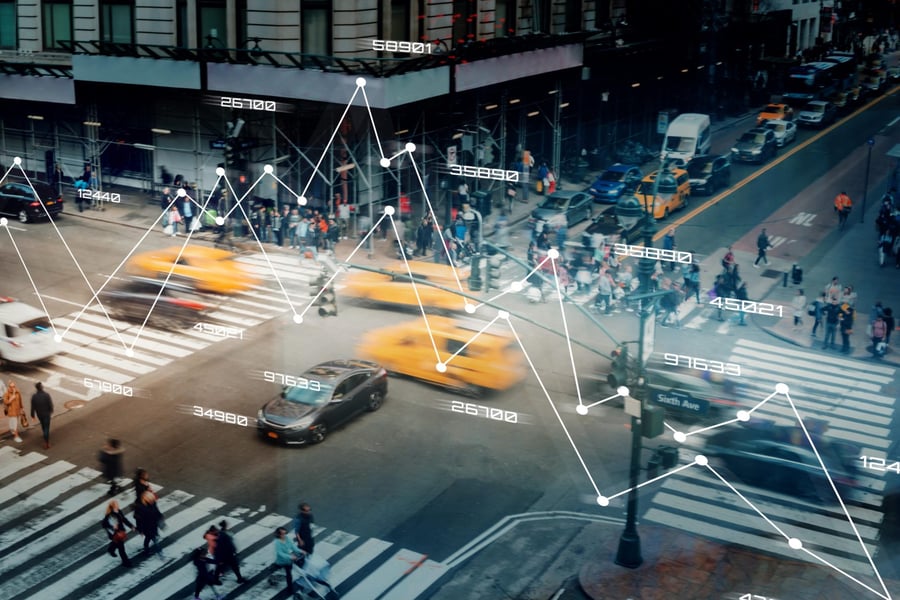
Modern traffic isn’t just about red lights, asphalt, and angry horns. It's powered by a quiet revolution, data. And while traditional sensors like loop detectors and speed cameras still play a role, the real momentum is shifting toward richer, more dynamic data sources.
Today’s smart cities rely on fresh, fast, and flexible information to keep vehicles moving, reduce congestion, cut emissions, and improve public safety. These data streams go well beyond sensors, offering real-time insight into how people and goods flow through urban space.
In this article, we explore 7 cutting-edge data sources powering smarter traffic today, and why they matter more than ever for Smart City Transportation Solutions.
1. Mobile Device Data: Millions of Signals on the Move
Our phones go everywhere with us, and they’re quietly helping traffic engineers do their jobs better. Mobile data collected from apps and GPS services (with privacy protection in place) offers deep insight into traffic patterns, driver behavior, and road usage across the day.
2. Connected Vehicle Data: Cars That Talk Back
Today’s vehicles are more than transport, they’re data centers on wheels. Connected cars send information about speed, location, braking, and even wiper usage back to manufacturers or municipal systems.
3. Transit System Data: The City’s Pulse
Public transportation is a goldmine of data, and it’s often underused. Today, transit agencies share real-time bus and train data via GTFS feeds (General Transit Feed Specification). These feeds track vehicle location, passenger counts, and arrival predictions.
When overlaid with vehicle traffic data, transit data gives a full picture of multimodal mobility. It highlights how subways, buses, scooters, and cars compete (or cooperate) for space and time on the street.
4. Social Media and Crowdsourced Reports
Yes, even tweets and app updates can shape traffic decisions.
Apps like Waze and Google Maps let users flag crashes, construction, or stalled vehicles. Social media platforms provide early signals of traffic incidents that may not be reported through official channels right away.
5. Aerial and Satellite Imagery: The Big Picture from Above
Drones, satellites, and high-altitude aircraft now offer detailed images of roadways, intersections, and vehicle movements. While not real-time minute-by-minute, they provide broader context that is invaluable for planning.
6. Environmental Sensors and Weather Data
You can’t manage traffic without managing the environment it moves through. Weather stations, air quality monitors, and flood sensors are critical pieces of the smarter traffic puzzle.
7. Payment and Toll System Data
Where people pay to drive, valuable behavioral data follows. Toll booths, congestion pricing systems, and parking apps gather high-quality data about where and when drivers are willing to pay to move.
Final Thoughts: Moving Past the Sensor Era
The days of relying solely on metal loops buried under pavement are over. The future of traffic management is beyond sensors; it’s in smart data layering, collaboration between public and private sources, and real-time decision-making at scale.
From the phones in our pockets to the satellites above, seven cutting-edge data sources are driving a transportation revolution, one that’s smoother, cleaner, and far more intelligent than anything before.
To build truly efficient and resilient cities, we need to expand our understanding of “traffic data.” It’s no longer just vehicle counts. It’s behavior, weather, context, and choice, all working together to keep cities moving.
Copyright © 2025 California Business Journal. All Rights Reserved.
For California Business Journal Disclaimers, go to /terms-conditions/.


