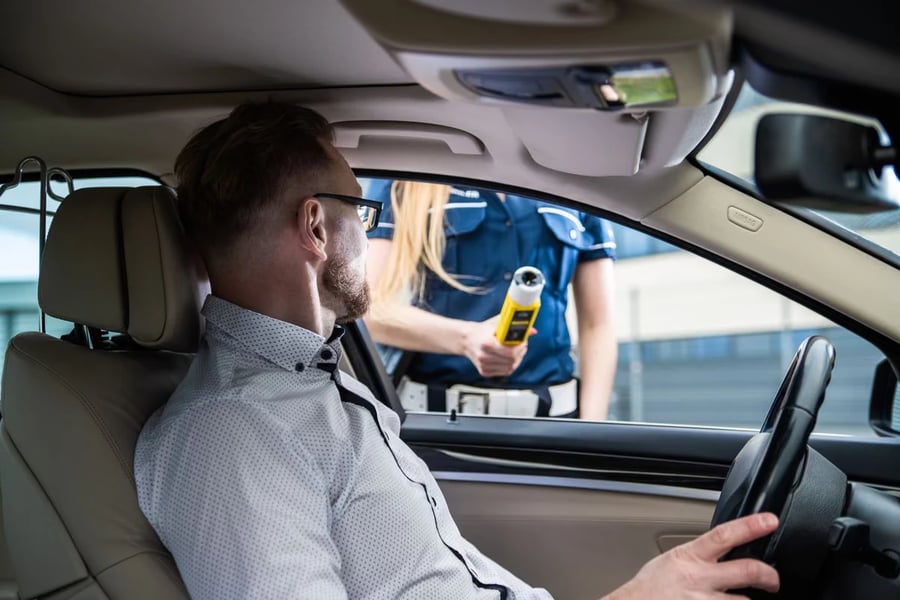
Here is a moment almost nobody prepares for: you are pulled over, the officer asks if you have been drinking, and suddenly you are staring at a plastic tube and wondering what exactly it is that the machine is looking for. Most people assume a breathalyzer measures how drunk you are right now. It does not. It estimates something else entirely, and the gap between the two is where innocent explanations live.
This guide walks you through the three main alcohol tests, what each one actually detects, and why the timing of the test can change everything. You will leave with a clear picture of how these tools work, so you understand the process whether you are curious, worried, or just trying to be a smarter driver.
What a Breath Test Is Actually Reading
Blow into the tube and the machine gives a number. That number gets treated like your blood alcohol concentration, but the device never touched your blood. It measured the alcohol vapor in your breath and used a ratio to estimate the amount in your bloodstream.
That ratio is where things get complicated. The standard partition ratio assumes 2100 parts of breath alcohol equal one part of blood alcohol. But that ratio varies naturally between people. Temperature, breathing patterns, and even how recently you burped can nudge the reading. The National Highway Traffic Safety Administration has documented that breath test devices can produce results with a margin of error around plus or minus 0.005 to 0.01 percent, which matters when the legal limit sits at 0.08 percent.
The bigger issue is timing. Alcohol absorbs into your blood over roughly 30 to 90 minutes after your last drink. If the officer tests you early in that window, your blood alcohol level might still be climbing. A reading taken at the peak can look far worse than your average level over the whole drive.
Why Mouth Alcohol Throws Off Results
Here is a scenario that plays out more often than you would think. You had one beer with dinner, then used mouthwash before heading out. Ten minutes later, you get pulled over. The breath test picks up the alcohol molecules sitting in your mouth tissue, not your bloodstream, and the reading spikes.
Officers are supposed to observe you for 15 to 20 minutes before the test to catch any burping, regurgitation, or recent drinking. That observation period exists precisely because mouth alcohol contaminates results. Skip that wait and the number can be inflated well above what your blood actually contains.
Blood Tests: The Closest Thing to the Truth
Blood tests are the gold standard for a reason. They measure the actual concentration of ethanol in your plasma, not an estimate based on a ratio. But they are not infallible either.
The test looks for ethanol, the specific type of alcohol in drinks. That distinction matters because your body produces other alcohols naturally through digestion. A blood test trained on ethanol ignores those, which makes it more specific than breath testing. The tradeoff is practicality. Blood draws require trained personnel, sterile equipment, and a delay while you get to a hospital or station. The NHTSA notes that blood sample analysis remains the most reliable evidentiary method available, and every state accepts it as evidence in court.
Timing matters here just as much. If the draw happens an hour after the stop, your body has already started metabolizing the alcohol. A result of 0.06 percent at the hospital might have been 0.09 percent when you were actually driving. Retrograde extrapolation attempts to back-calculate, but it relies on assumptions about your metabolism rate that can vary by a factor of two between individuals.
The Chain of Custody Factor
Blood tests go through a chain of custody that breath tests skip entirely. The sample bottles get sealed, labeled, logged, and transported. Every handoff gets documented. Break that chain, and a good defense attorney can get the results thrown out entirely.
That is a concrete reason why blood test challenges often focus on procedure rather than science. A mishandled vial or a missing signature undermines the evidence without ever questioning the accuracy of the lab equipment itself.
Urine Tests: The Slowest of the Three
Urine tests measure alcohol that your body has already processed, which makes them the least useful for establishing impairment at the time of driving. The lag between when you drink and when alcohol shows up in urine can be significant, and the concentration varies based on how hydrated you are.
Think about what that means practically. Two people drink the same amount. One drinks water all night, the other does not. Their urine alcohol concentrations will differ even if their blood alcohol levels are identical. That variability is why many states have moved away from urine testing for DUI cases entirely. It remains in use mostly for workplace screening, not roadside enforcement.
If you are given a urine test, the timing of your last urination before the sample matters enormously. The test captures what has collected since your last void, so a person who used the restroom an hour ago will have a different result than someone who has not gone in four hours.
How Alcohol Leaves Your Body
Your liver processes alcohol at a fairly steady rate, but that rate is not the same for everyone. The typical range sits somewhere between 0.015 and 0.02 percent per hour, which means it takes roughly two to three hours to eliminate the alcohol from a single standard drink. Nothing speeds that up. Coffee, cold showers, food, exercise, none of it changes the metabolic rate.
This matters because it determines what a test can show hours after the stop. The National Institute on Alcohol Abuse and Alcoholism reports that the body eliminates alcohol at a rate that varies with body composition, genetics, and drinking history, and that variation is exactly why estimating a past blood alcohol level is so unreliable.
Here is where the science gets personal. A male subject weighing 160 pounds typically has a larger volume of distribution than a female subject of the same weight, because muscle tissue holds more water than fat tissue. That means the same dose of alcohol produces a higher blood concentration in the smaller-volume body. It is not about tolerance or willpower. It is simple dilution math.
What to Do If You Are Tested
You cannot control the machine, but you can control how you handle the process. These steps do not require a law degree, just the presence of mind to follow procedure.
Note the time of your last drink and the time of the test. Write both down as soon as you can. That gap is the single most important fact in your case.
Pay attention to whether the officer observes you for the full observation period before a breath test. No observation means contaminated results are possible.
Ask what kind of test you are taking. Breath, blood, and urine all create different records with different weaknesses.
Keep receipts, bank statements, or witnesses that establish where you were and what you consumed. A dinner receipt with a timestamp is stronger evidence than your memory.
Request a copy of the maintenance records for the breath test device. Calibration logs and certification dates get challenged on a regular basis.
One thing to remember through all of this: the test result is not the whole story. The instrument reading gets interpreted against the legal standard, and that interpretation leaves room for the facts you can document yourself. The timing, your body, the observation procedure, all of it shapes what the number on the paper actually means.
So the next time someone tells you the breathalyzer caught them at 0.09, the honest answer is that it depends on what the test actually detected, when it ran, and who was watching. The science behind these tools is solid, but the application leaves plenty of space for a closer look. If you find yourself on the receiving end of a test result, the smart move is understanding exactly what was measured and how, before you accept what the number suggests. A good starting point is familiarizing yourself with the Louisiana DUI laws if you are in that state, since procedures and penalties vary widely place to place. Armed with that context, you can ask the right questions and make the process work for you instead of against you.
What surprised you most about how these tests actually work? The answer might be the thing that saves you.
Copyright © 2026 California Business Journal. All Rights Reserved.
For California Business Journal Disclaimers, go to https://calbizjournal.com/terms-conditions/.


