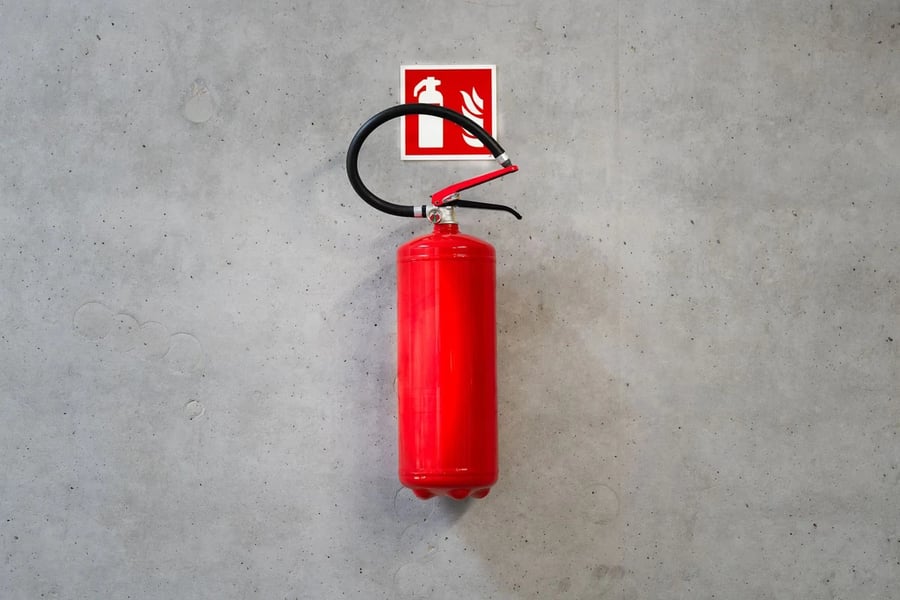
A fire extinguisher may look fine while hanging on the wall, but appearance alone does not confirm that it is ready for an emergency. Professional inspection and maintenance from a reputable fire protection company can cover accessibility, pressure, physical damage, service history, and other factors that affect how reliably the equipment may perform when needed.
Start With Location and Accessibility
Before checking the extinguisher itself, technicians consider where it is installed.
The unit should be visible, accessible, and easy to reach. Furniture, shelving, boxes, or equipment should not block access.
Changes to a building layout can make a previously suitable location less practical, especially in commercial and industrial spaces.
Check the Pressure
For extinguishers equipped with pressure gauges, the reading provides a quick indication of condition.
The needle should normally remain within the designated operating range. Low pressure may suggest a leak or previous discharge, while an unusual high reading may also require attention.
Technicians also look for cracked gauges, damaged needles, or loose fittings. Since extinguishers vary by type, the appropriate inspection procedure is not identical for every unit.
Inspect Pins, Seals, Hoses, and Nozzles
The safety pin and tamper seal can reveal whether an extinguisher has been handled or discharged.
A missing pin or damaged seal may indicate that the unit needs further inspection rather than simply being resealed.
Dust, debris, or grease around the opening could interfere with discharge, so the path should remain clear and in good condition.
Examine the Cylinder
The cylinder is pressurized, making physical damage especially important.
Technicians look for dents, leaks, rust, corrosion, deep scratches, and damaged fittings. Environmental conditions can also affect deterioration.
Extinguishers located outdoors or in damp, industrial, kitchen, or garage environments may experience different levels of wear than equipment stored in climate-controlled areas.
Make Sure Labels Are Readable
Instructional labels and classification markings should remain clear enough to read quickly.
Paint, dirt, fading, or stickers should not obscure information about what type of fire the extinguisher is designed to handle or how it should be operated.
During an emergency, clear instructions can also help someone use the equipment correctly.
Review the Service History
A clean extinguisher can still be overdue for maintenance.
Inspection tags and service records help show when equipment was last inspected, serviced, recharged, or tested.
Missing records do not automatically mean a unit is unsafe, but they can create questions about its condition and maintenance history.
Know the Limits of Visual Checks
A visual inspection can identify blocked access, corrosion, broken seals, damaged hoses, or abnormal pressure, but it cannot reveal every potential problem.
Depending on the extinguisher's type, age, and history, professional maintenance may involve recharging, internal examination, replacing components, or hydrostatic testing.
Consider the Surrounding Environment
A properly maintained extinguisher may still become unsuitable if the surrounding space changes.
A room once used as an office might later contain machinery, cooking equipment, chemicals, or stored materials.
A professional inspection therefore considers the extinguisher in relation to the area it is meant to protect.
Know When a Unit Needs Attention
Visible discharge, serious corrosion, abnormal pressure, damaged hoses, leaks, missing safety components, or uncertain maintenance history may justify removing an extinguisher from service until it is evaluated.
A professional can determine whether servicing, recharging, testing, or replacement is appropriate.
Regular Checks Support Fire Readiness
Extinguishers often remain unused for long periods, which makes routine inspection important.
Checking accessibility, pressure, seals, hoses, cylinder condition, labels, service records, and placement can identify problems before an emergency occurs. The goal is not simply to have an extinguisher on the wall, but to keep it properly maintained and ready for use.
Copyright © 2026 California Business Journal. All Rights Reserved.
For California Business Journal Disclaimers, go to https://calbizjournal.com/terms-conditions/.


