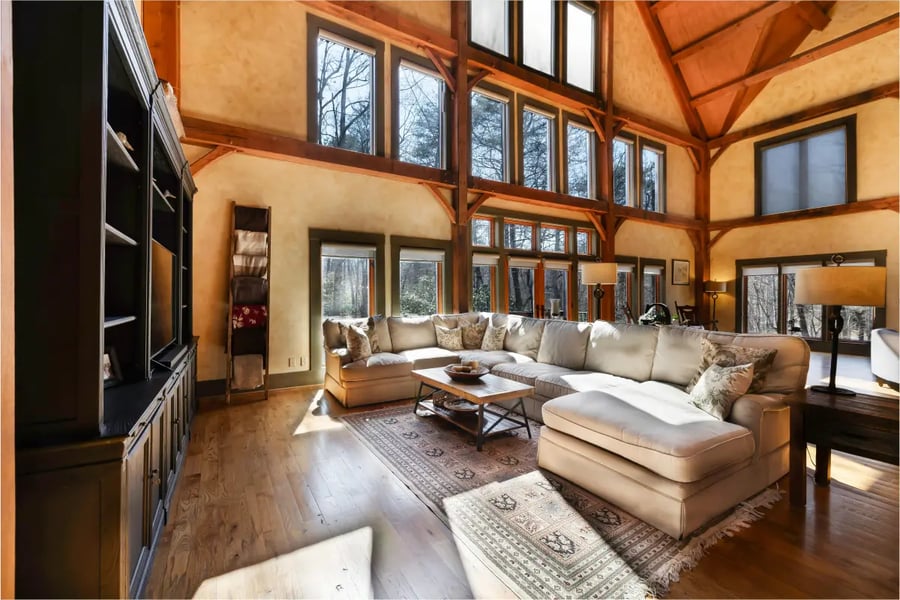
California swings from salty-bluff sunsets to Sierra powder, so any home here must shrug off ocean fog, 100-mph winds, heavy snow, earthquakes, and wildfire. Choose the wrong builder and that postcard vision can become a code-violation mess.
Search “best timber frame builders in California” and you’ll mostly find promo pages or barndominium lists—helpful for metal sheds, useless for heirloom joinery built to outsmart quakes and embers.
The stakes keep climbing: the new Zone 0 rule now bans anything combustible within five feet of a house in high-risk areas, tightening permits and insurance alike.
Fortunately, seasoned specialists already meet those hurdles. Riverbend Timber Framing, for instance, brings 45 plus years of California-specific engineering savvy. In this guide, we rank eight standout teams that blend artistry with structural muscle and transparent budgets—so you can match the right builder to your coastal cottage or mountain lodge vision.
Our ranking methodology
Finding the right builder is too important to guess, so we designed a clear scoring system you can trust.
We started with about 20 timber-frame firms that actively serve California. Each one had to:
- hold a California contractor’s license or partner with a licensed local GC
- show at least one verifiable project in the state
- log five or more years in business
Any firm that missed a single test was removed.
Next, we scored the survivors on six factors that decide success on fault lines and in fire zones:
- Design and craftsmanship – how cleanly they cut joints and shape forms
- Engineering and code compliance – track record with seismic, wildfire, wind, and snow rules
- Sustainability and resilience – use of FSC or reclaimed wood, high-performance envelopes, and fire-hardening details
- Client satisfaction – third-party reviews and detailed testimonials
- Transparency and value – upfront pricing, clear timelines, and solid warranties
- Portfolio depth and experience – decades in the shop and breadth across California terrains
We weighted these categories nearly equally, giving a slight edge to design and engineering because beauty and safety guide most buying choices. Raw scores rolled into a 100-point scale and revealed the eight leaders you will meet next.
1. Hamill Creek Timber Homes: custom craftsmanship that travels well
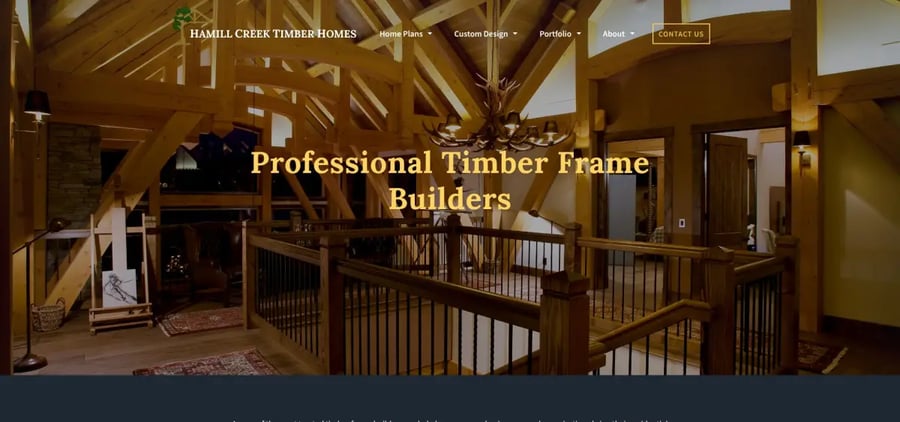
Picture a frame so precisely cut that every mortise and tenon slides together like a puzzle, then holds firm through earthquakes and ember storms. That is Hamill Creek in action.
From initial consultation and timber sourcing to frame production and on-site raising, Hamill Creek’s team handles every step in-house; their timber frame builders page outlines each stage so homeowners know exactly what happens when. This end-to-end control is how the Canadian firm has spent more than three decades shipping handcrafted Douglas-fir and cedar frames into California’s trickiest sites: cliff-edge Malibu lots, snow-buried Tahoe slopes, and wildfire corridors in wine country.
Distance is routine for them. CNC-machined timbers arrive in labeled bundles, and a raise crew can dry-in the shell before coastal fog drifts back.
Clients receive museum-grade detailing—think hammer-beam trusses and hand-smoothed chamfers—along with rigorous engineering. Hamill’s designers work with California structural engineers to hide steel knife plates inside beams for seismic strength, specify Class A metal roofs, and enclose eaves for Wildland-Urban Interface compliance. The result satisfies inspectors and still turns heads.
Sustainability runs deep. Timbers come from responsibly managed British Columbia forests and air-dry for stability, which saves energy and locks in dimensional accuracy.
Expect bespoke pricing that reflects this white-glove approach. Recent California builds finish in the 300- to 500-dollar-per-square-foot turnkey range, and owners say the investment shows in every grain. If your dream calls for a unique timber masterpiece and you value artisanship as much as code compliance, Hamill Creek earns the lead spot on our list.
2. DC Builders: turnkey barn-style luxury from blueprint to welcome mat
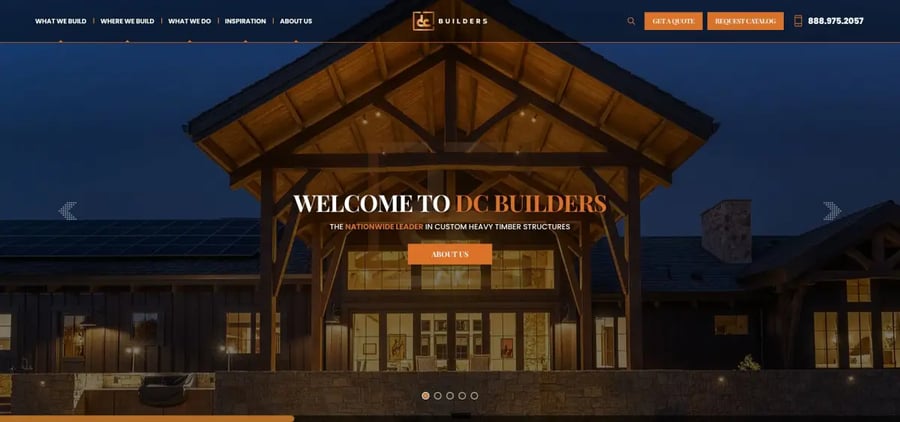
If you want one team that drives every nail from concept to final walk-through, DC Builders is your crew.
Based near Portland and licensed in California, they run projects from San Diego horse estates to Napa winery workshops. Two divisions keep things flexible. Pick DC Builders for full design-build service, or choose DC Structures if you prefer a precision-cut kit that a local GC installs. Either way, the same architects and engineers stand behind the plans.
DC’s signature look is refined barn language: soaring gables, exposed trusses, and wide glass walls that fill great rooms with vineyard light. Under the rustic charm sits serious engineering. Coastal homes get stainless connectors that shrug off salt. Mountain lodges hide steel moment frames for seismic strength and 150-pound-per-square-foot snow loads. Wildfire parcels leave the shop specified with Class A metal roofing, fire-rated siding, and ember-screened vents. The permitting team knows Chapter 7A line by line, so approvals land faster.
Clients praise the communication. Weekly video updates, cloud schedules, and a dedicated project manager keep surprises pleasant. The company protects timelines and budgets, then backs the promise with a one-year workmanship warranty.
Money talk starts early. During a free design call you will see ballpark numbers: kits usually run 40 to 85 dollars per square foot, and turnkey builds often finish at three to five times that, depending on finishes. DC also pairs you with lenders who understand timber to shorten the loan maze.
Choose DC Builders when you want barn-inspired elegance, prefer a single contract, and value a process that feels closer to concierge help than construction chaos.
3. PrecisionCraft Log & Timber Homes: mountain-grade architecture with five-star finish
Some companies sell timber frames. PrecisionCraft delivers a full alpine experience, from the first topo map to the last cabinet pull.
The Idaho design studio, M.T.N Architects, sketches homes that feel lifted from a luxury ski resort, then engineers them to ride out Sierra blizzards and Richter-seven shakes. Riverbend Timber Framing shares the same corporate roof, so if you prefer a pure post-and-beam aesthetic, four decades of joinery skill are close at hand.
California projects dot their map like trailheads: Truckee ridge lines, Big Bear lakefronts, Carmel Valley vineyards. Each job pairs statement timbers with site-specific science: concealed steel frames for lateral strength, SIP or ICF shells that beat Title 24 by double digits, and Class A metal roofs ready for ember showers. Designers even plot defensible space before drawing the first gable.
PrecisionCraft is not a kit shop. Plan for months of collaborative design, photorealistic renderings, and a finished budget of roughly 300 to 400 dollars per square foot in California. Clients who write those checks report no remorse. They praise attentive project managers who solve issues before they cost money and beams so clean you pause before hanging art.
Pick PrecisionCraft when your dream home sits halfway up a mountain road, demands a postcard view from every room, and deserves architecture that matches the scenery.
4. New Energy Works Timberframers: sustainability meets sculptural design
If you think a home should tread lightly on the planet and still impress every visitor, New Energy Works (NEW) may be the match.
With studios in New York and Oregon, the company ships West-Coast frames into Sonoma, Mendocino, and Big Sur. Reclaimed Douglas-fir pairs with broad glass walls, while architects favor curved glulams and cantilevered decks, all supported by engineering tuned for California quakes.
Energy performance comes standard. NEW fabricates high-performance enclosure panels that arrive insulated, air-sealed, and ready for windows. Crews stand them in days, creating an envelope that often beats Title 24 by double digits, trimming HVAC size, power bills, and carbon footprint.
Fire safety receives equal focus. Designers specify ignition-resistant siding, metal roofing, and generous overhangs that shed embers. On hillside sites they may even shape the floor plan to form a natural Zone 0 buffer, trading mulch for stone patios and built-in benches.
Budgets stay clear from day one. Finished costs usually land between 300 and 500 dollars per square foot in California, with reclaimed-wood detailing at the higher end. Owners say the added cost shows in every beam, like a living-room truss crafted from an 1800s orchard barn, and in a builder who treats carbon as carefully as cash.
Choose NEW when you value eco credentials, admire modern lines, and want a house that feels handcrafted yet performs like tomorrow’s tech.
5. Timberbuilt: prefab efficiency with designer style
Timberbuilt proves you can combine speed, style, and sustainability without sky-high budgets.
The New York firm ships pre-cut frames and SIP wall panels nationwide, then flies in a raise crew to set the shell in a week. That pace matters on California’s remote ridges where labor is scarce and weather windows narrow. Less time exposed means fewer delays and lower carrying costs.
Designs lean modern rustic: clean-lined timber grids, wide glass, and metal roofs that sail through wildfire review. Engineers adjust every package to local seismic and snow demands, so a Brighton model headed to Lake Tahoe gains thicker rafters, while the same plan on the Central Coast swaps in stainless connectors to resist salt spray.
Energy bills fall too. The factory-fit SIP envelope delivers R-40 plus walls and near-zero air leakage. Many owners cut heating and cooling use by half compared with code minimums and report steady interior temps even during triple-digit valley heat waves.
Numbers stay clear from the first call. Timberbuilt posts sample shell pricing that averages 80 to 95 dollars per square foot, letting you project a finished cost of 250 to 350 dollars depending on finishes. Transparent allowances and detailed manuals help lenders and local GCs approve plans quickly.
Choose Timberbuilt when you want contemporary timber style, prefer to lock costs early, and need the shell dried in before the first Sierra snow or Santa Ana wind.
6. Woodhouse: decades of design variety with local hand holding
Woodhouse has crafted timber frames since disco played on the radio, and that longevity shows in its playbook.
Begin with a catalog of more than ninety floor plans, from cozy bungalows to sweeping lodges. Pick one as a template or start fresh with the in-house design team. A dedicated California representative then turns ideas into stamped plans, handles local quirks, and lines up trusted GCs who have assembled Woodhouse packages before.
Frames arrive pre-cut, labeled, and ready for a quick raise. Eastern white pine or Douglas-fir timbers join with oak pegs, while engineers hide steel rods and hurricane straps inside posts to meet seismic and coastal wind rules. In wildfire zones, reps guide material changes such as fiber-cement siding, metal roofing, and ember guards so permits clear Chapter 7A reviews.
Energy performance stays strong. Most clients pair the frame with SIP walls or spray-foam stud infill, easily beating Title 24 and trimming utility bills. Homeowners in the Santa Cruz Mountains report summer interiors ten degrees cooler than neighbors’ conventional builds without touching the thermostat.
Woodhouse keeps money talk clear. The company breaks costs into frame package, enclosure, and finish allowances, helping banks appraise accurately. Finished California builds usually fall between 250 and 400 dollars per square foot, a sweet spot for buyers who want custom flair without boutique prices.
Choose Woodhouse when you like the safety net of a proven system, want design flexibility, and value a local guide who stays involved from first sketch to final peg.
7. Dos Osos Timber Works: California craft, permits, and personality in one phone call
Sometimes local knowledge beats sheer size. Dos Osos Timber Works, based in Los Osos on the Central Coast, brings artisan skill and permit savvy to every beam they raise.
Because the crew carries a California general-contractor license, the same team that designs your frame also handles coastal-commission paperwork, wildfire checklists, and LEED documentation when sustainability is on the wish list. Homeowners say the convenience feels almost like a secret advantage: one contract, one point of contact, no finger-pointing.
Dos Osos favors true mortise and tenon joinery, often hand-hewn and sometimes accented with coastal carvings. Beauty never undercuts strength. Engineers hide steel brackets inside key joints, add plywood shear panels where inspectors require them, and specify stainless hardware for sea-spray zones. A recent Paso Robles winery cleared seismic review on the first submission, proof of their code fluency.
Wildfire resilience appears in the details. The team encloses soffits, pairs ignition-resistant siding with fire-rated trim, and designs site plans that swap flammable mulch for drought-tolerant succulents inside the new Zone 0 buffer. Clients in Cambria say these steps helped their projects breeze through Chapter 7A without costly redraws.
Budgets sit in the custom middle ground, roughly 300 dollars per square foot and up, but many owners report savings in soft costs because design, engineering, and construction stay under one roof. Choose Dos Osos when you value hands-on artistry, prefer face-to-face job-site meetings, and want a builder who speaks the same regulatory language as your county planner.
8. Timberlyne: barn-home kits that put you in the driver’s seat
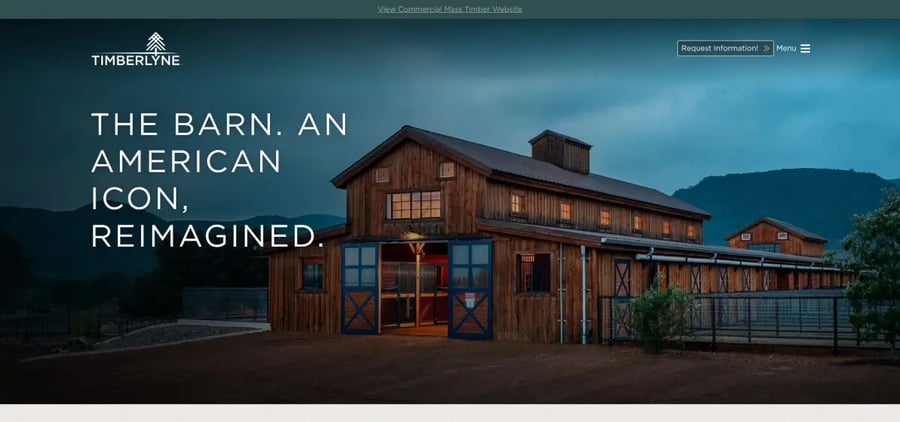
Love the romance of a classic barn silhouette but want the freedom to finish it your way? Timberlyne delivers.
From its Nebraska plant the company ships pre-engineered post and beam kits nationwide, California included. Each timber, siding board, and cupola arrives numbered and ready for assembly, so what could be a puzzle becomes a set of clear, step-by-step instructions.
Engineering comes early. After you lock the floor plan, Timberlyne recalculates loads for your site. Building in Ventura seismic Zone 4? Steel knee braces and anchored hold-downs get added. Moving into Tahoe snow country? Rafters and purlins grow to handle 150-pound drifts. Fire-prone parcel? Choose fiber cement siding and a standing seam metal roof.
Because Timberlyne supplies only the kit, you hire your own general contractor or act as owner-builder. That freedom helps keep costs down. Barn-home shell kits often start near 100 dollars per square foot, and many California owners finish between 225 and 325 dollars per square foot, depending on taste and local labor.
Support stays close after delivery. A project coach remains on call, and replacement parts ship overnight if a beam picks up damage. Owners say that safety net prevents small hiccups from turning into schedule killers.
Pick Timberlyne if you want authentic barn character, tight budget control, and feel comfortable wearing a light construction-manager hat to guide the project.
How to choose the right timber-frame partner in California
We have eight strong options, so the real question is which one fits your project?
Start by clarifying your priorities. If you want a single contract from permit to punch list, focus on full-service firms such as DC Builders or Dos Osos. Prefer to supervise subs and keep costs tight? A kit supplier like Timberlyne or a package provider like Woodhouse puts you in the driver’s seat.
Next, map site realities. Building in a high fire-severity zone near Lake Arrowhead? Shortlist teams that lead with wildfire hardening; Hamill Creek, PrecisionCraft, and NEW have proven Chapter 7A details. Sitting on a seismic ridge above Santa Cruz? Ask each candidate for California-stamped seismic plans they have already delivered.
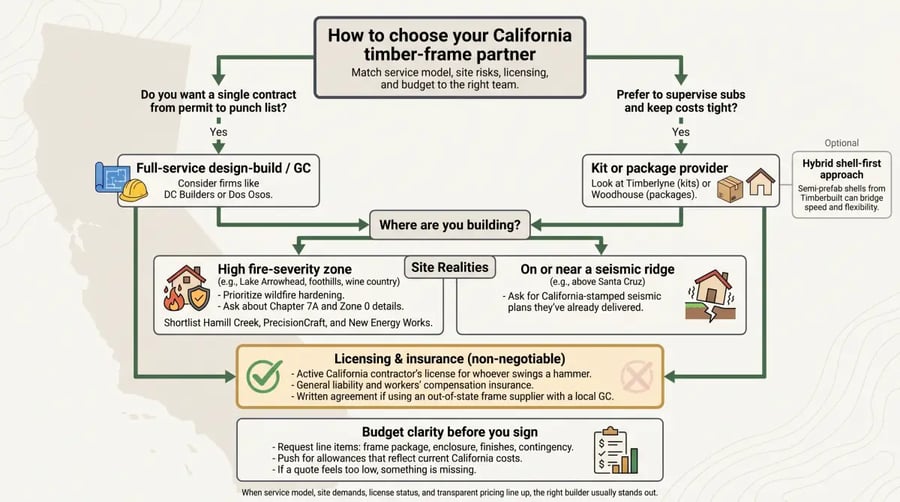
Licensing is non-negotiable. Confirm that whoever swings a hammer on your land holds an active California contractor’s license and carries liability and workers’ compensation insurance. Out-of-state companies without a license must partner with a local GC, and that relationship should be in writing before you send a deposit.
Budget clarity is the final checkpoint. A reliable builder presents hard numbers early: frame package, enclosure, finishes, and a contingency line by line. Push for allowances that match current California labor and material costs. If a quote feels too low, something is missing.
When you align service model, site demands, license status, and transparent pricing, the right builder usually stands out. Trust that clarity and move forward with confidence.
Copyright © 2026 California Business Journal. All Rights Reserved.
For California Business Journal Disclaimers, go to /terms-conditions/.


