What does my sister’s wedding, the State of the Union, an Apple product launch, and a Fortune 100 holiday party have in common?
At first glance—other than sounding like the setup to a bad joke—not much. Different audiences, different stakes, different levels of press coverage. But in the events world, they all get treated the same...because they have to be. Behind each one is a message, a mission, and a moment that someone cares deeply about. And when that moment arrives, it has to be executed with precision.
Is a wedding as important as the State of the Union? On paper, no. But try telling a bride this isn’t the most important day in the world—to her face—30 minutes before she walks down the aisle. (Okay, maybe don’t do that.) That moment is everything. And that’s the thing about events: the stakes aren’t set by media coverage or headcount. They’re set by the people who care, why they care, and how much it means to them.
You can plan the timing, the lighting, the layout. But the heartbeat—and biggest variable—of any event is the people. Will they show up? How many? What will they care about? What will they mess up? Will they be able to find the bathrooms?
People are unpredictable, exhausting, sometimes relentless—but they’re also energizing, inspiring, and the whole reason we do this work in the first place. Because no matter how perfect the script is, the real magic of an event only happens when it connects with the people in the room.
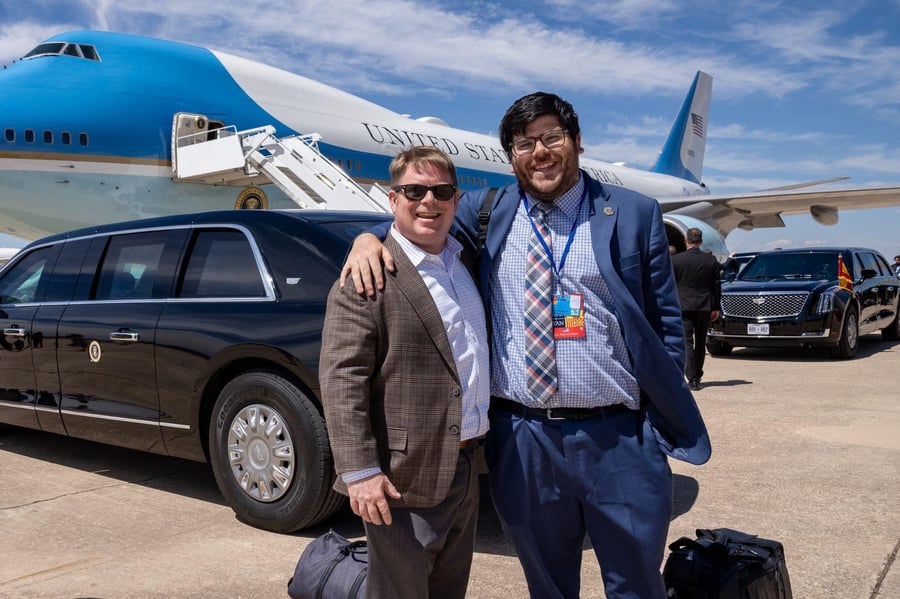
I’ve spent the last decade in high-stakes event production—first on the campaign trail, then at the White House, where I served as Director of Presidential Production for President Joe Biden. I’ve helped design and deliver more than 1,200 events across 34 states and in over 20 countries. And there’s always one moment that creeps in and feels the same. It’s the moment that really sticks with me.
Whether you’re producing a speech for the President of the United States or a high school graduation in a small-town gymnasium, it’s the stillness right before showtime.
The feeling that the event is happening—with or without you. It’s minutes away. The guests are arriving. The lights are coming up. Whatever’s going to go wrong probably already has. So you push past the adrenaline, stay calm, stay sharp, and zero in on the handful of things you can still control—the ones you have just enough time to fix, polish, or make better.
Let’s be honest: there are days when things just aren’t going your way—and in those final moments, it’s not about making it perfect. It’s about triaging and prioritizing what you can. Stop the bleeding where you can, stabilize what’s critical, and focus your energy on the pieces that can still land the right way.
That’s the magic of live events that I love. The moment when it all starts to happen—literally. Ideas that were once sketched out on paper are now being brought to life by hundreds of people working in sync. And while no two events are ever the same, the best ones do share a few things in common.
1. Logistics and storytelling go hand-in-hand.
Most people think of event production as either all logistics or all creativity. In reality, good events are a conversation between the two. A well-placed stage, a carefully timed walk-on, the right screen content behind a keynote—all of it shapes how the audience receives the message. You can’t separate how it looks from how it works.
Take the Super Bowl halftime show. You can book Kendrick Lamar, design the world’s most compelling performance, and have 100 million people watching. But if it took 12 hours to set up the stage, the moment would lose its magic. The power of that show isn’t just the spectacle, it’s the fact that it unfolds flawlessly in the narrowest possible window, under global pressure, and vanishes just as quickly, moments before the game resumes.
The Super Bowl works because everything clicks. It’s not just entertainment,it’s choreography, logistics, engineering, and creativity moving in perfect sync. That’s the goal of any great event: to make something incredibly complex look and feel effortless. Like a symphony, where dozens—or hundreds—of individual elements come together in perfect timing and harmony. You don’t need to know how to play every instrument to recognize the beauty of the full performance. Great events should feel the same way.
I’ve had to make that happen under some of the most visible, high-pressure conditions in the world, whether planning a White House address for President Joe Biden or producing a nationally televised speech at the Grand Canyon. The backdrop might be stunning, the content powerful, but none of that matters if the fundamentals aren’t right. If guests have to walk two miles in 110-degree heat—with no bathrooms, no water, and no ADA access—the entire experience breaks down. Production without well-thought-out logistics defeats the purpose of making an event beautiful.
2. Tiny Details. Huge Consequences.
Every invitation is a first impression. Every credential, directional sign, or shuttle pickup is a reflection of what you want your guests to feel. Whether we’re planning a press conference in a hotel ballroom or a private event for 200 CEOs, we aim to make every moment thoughtful. Not overproduced, but intentional.
Running an event is a lot like being the CEO of a small, fast-moving company: everything is your problem, whether or not it’s your fault. If you're hosting an event in a hotel and the bathrooms are out of order, guests won’t ask whose responsibility it was. They’ll just remember that there were no working bathrooms. If you’re launching a product outdoors and it rained the night before, leaving guests to trudge through mud, they won’t be thinking about your run of show. They’ll be thinking about how uncomfortable they are.
Details matter. Small details matter even more. People might not notice them when they go right—but they will definitely remember when something goes wrong.
3. Every plan fails. Plan on it.
Making a detailed plan of record is essential when you’re producing a high-stakes event. But knowing what to do—not if, but when—that plan goes sideways is even more important.
I’ve had some truly unexpected moments over the years: fire alarms going off mid-program, a light catching fire, a guest arrested for bringing a taser in her purse, and serious medical emergencies—including a child having a seizure during a public event. I’ve had U.S. Senators and Cabinet Secretaries go missing backstage moments before they were supposed to speak. I’ve seen large tents lift off the ground and scissor lifts topple over in high winds. I’ve had a translator disappear moments before a live international press conference with world leaders.
And in 2021, when President Joe Biden was speaking at a solar farm in Colorado, a lightning storm began rolling in. We were within seconds of evacuating the entire site—while the President was still on stage—because safety always comes before optics. Luckily, the lightning held off until moments after the President’s remarks finished… and the White House guests (and the President) all departed safely.
These aren’t theoretical risks. They’re real. They happen. And they happen fast.
Contingency plans aren’t just for paperwork or first responders. They’re the blueprint that gives your team a playbook to respond with clarity and speed. But the truth is, most plans don’t cover the intangibles. The real difference comes down to how your team shows up under pressure. Remaining calm, empowering people to do their jobs, and communicating clearly—that’s what carries you through the unexpected.
Contingency plans aren’t just for paperwork or first responders. They’re the blueprint that gives your team a playbook to respond with clarity and speed. But the truth is, most plans don’t cover the intangibles. The real difference comes down to how your team shows up under pressure. Remaining calm, empowering people to do their jobs, and communicating clearly—that’s what carries you through the unexpected.
4. Production should feel invisible.
Unless you’re producing Ultra Music Festival with 500 drones, multiple pyro elements, an 8K LED wall, and a multicam livestream flying FPV drones through the crowd, people usually don’t walk away talking about the production… unless something went wrong.
Think: Carrie Underwood’s mic not working at Donald Trump’s second inauguration. Or the wrong winner being announced at the Oscars. Or the stage collapsing before a Radiohead concert in Toronto. Or when a fireworks malfunction cut short San Diego’s Fourth of July show—launching every single firework in the first 30 seconds. Or Adele’s 2016 Grammy performance, where a mic fell into the piano mid-song and created a twanging sound on live TV.
When production fails, it becomes the headline. And when it works? It fades into the background and lets the moment shine.
But when it works? It fades into the background and lets the moment shine. The mic is hot. The walk-on is tight. The transition hits exactly when it should. The audience isn’t thinking about the cues, they’re enjoying the show without thinking about the elements individually.
Even in presidential events, sometimes the most powerful moments have almost zero production. When President George W. Bush stood on the rubble at Ground Zero after 9/11—windbreaker on, bullhorn in hand—there was no LED screen, no stage lighting, no press riser. And there didn’t need to be... there couldn’t be. The message, the emotion, and the moment were completely aligned.
The bullhorn wasn’t even part of the plan—it was improvised because people nearby couldn’t hear him. In fact, a firefighter shouted, “We can’t hear you!” And President Bush—without skipping a beat—turned a minor production flub into a line heard around the world: “I can hear you! The rest of the world hears you!” That moment became iconic. It wasn’t scripted. It wasn’t lit. But it landed—because it was real.
It was raw. It was human. And it was exactly right, even when it went wrong.
5. Take the job - not yourself - seriously.
The night before a major event, I bring everyone together. And I mean everyone—from technical leads to security teams, vendors to registration and check-in staff. We walk through the full plan, and everyone has the space to speak up, poke holes, and raise concerns.
And here’s something I’ve learned the hard way: if everyone’s just nodding along and no one is asking hard questions, something big is wrong—you just haven’t figured out what yet.
Great leaders in this space aren’t the loudest people in the room—or the ones talking the most on comms. They’re the best listeners. The ones who create a culture where people feel valued enough to raise a hand and say, “This won’t work—and here’s why.”
At every major event I’ve ever produced, there’s always a moment of levity on the radio. A joke. A weird comment. Someone laughing in the middle of a long hold. Because we’re human. And everyone needs a pressure valve—otherwise the stress builds, the comms get tense, and someone snaps at a credential checker for no good reason. So yes—take the job seriously. But don’t take yourself too seriously.
Mistakes are going to happen. That’s part of live events. What matters is that your team knows they can speak up, fix the problem fast, and never make the same mistake twice.
To borrow from Maya Angelou: people will forget what you said, people will forget what you did, but people will never forget how you made them feel. Events are a lot like that. The best ones don’t just deliver a message—they leave people with a feeling that lasts.
Most people won’t remember the font on the step-and-repeat or the exact words on the backdrop. They definitely won’t know what lighting fixtures you used, what model LED tiles, or what capsules the mics had in them. But they will remember if they could see the stage, if they could hear the presenters—and most importantly: how it felt to be in the room.
About the Author
Ian Mellul is the founder of Resolute Productions and the former Director of Presidential Production at the White House for President Joe Biden. He’s known for bringing structure to chaos, humor to high-pressure moments, and delivering events that actually land. His work spans presidential campaigns, global summits, and private events—always with a focus on logistics, leadership, and getting the details right.
Copyright © 2025 California Business Journal. All Rights Reserved.
For California Business Journal Disclaimers, go to /terms-conditions/.


