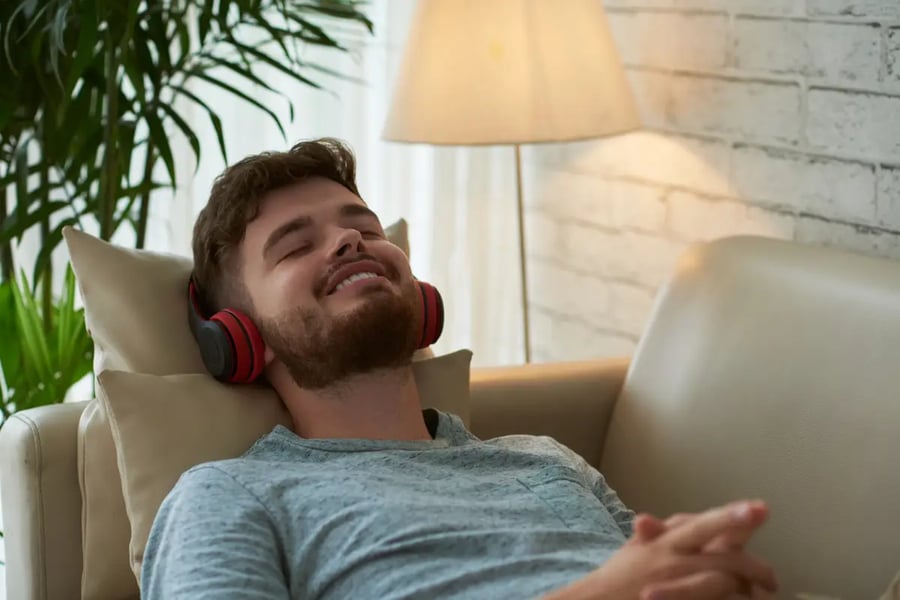
How do you think an employee would hold up if their supervisor handed them the bookkeeping, the emails, the meetings, the last-minute requests, and every emergency that came up. The same thing can happen when you rely on just one way to relax. If you send every kind of stress—work frustration, mental exhaustion, boredom, anxiety—through the same outlet, it can eventually stop giving you the relief it once did. Different kinds of stress call for different kinds of recovery.
Having more than one way to unwind isn’t just about having options. It’s about giving yourself different tools for different moments. Here are five reasons why having more than one way to relax can make a difference.
- The Novelty Wears Off
Repetition dulls a reward faster than most people expect. A show that felt like the perfect escape the first few times can turn into background noise by the tenth rewatch, and a workout that once cleared your head can start to feel like just another box to check. Neuroscientists call this habituation; the brain responds less to a stimulus the more familiar it becomes, the same way a favorite song loses its edge after heavy rotation.
The complaint "it doesn't work anymore" usually has less to do with the activity itself and more to do with nothing new being asked of it. Rotate between a few different activities, and each one stays sharp, because none of them gets worn down to background noise the way a lone go-to eventually does.
- Stress Isn't One-Size-Fits-All
Freshness solves one problem, but it doesn't solve the other. Even an activity you still genuinely enjoy can be the wrong fix for what a particular day actually needs. Mental fatigue, physical exhaustion, and social burnout are three different problems, and no single fix covers all three. Back-to-back meetings leave you needing something quiet and low-effort, while a stretch of isolation leaves you needing company instead.
One coping tool for every kind of stress works about as well as one key for every lock: it opens a few doors and jams on the rest. This is where variety earns its keep. A movie suits the nights that need stillness, a workout suits the days that need release, and a session where you play at an online casino Philippines platform suits the nights that need a bit of low-stakes excitement without leaving the house. None of these has to be the default; each one just has to be available at the right moment.
- One Option Can Fall Through
There's also a risk that has nothing to do with matching the mood: the one activity you rely on might just not be there. Gyms close early, friends get busy, and favorite shows eventually end their run. Rely on one form of relaxation, and you're left with nothing the moment it disappears, usually on exactly the night it's needed most.
A wider rotation removes that risk before it becomes a problem. Three or four go-to activities mean a backup is always ready, while one activity means betting that it will stay available forever. That is what separates adapting to a bad week from getting stuck in it.
- Flexibility Comes from Variety
Beyond backup plans, there's a payoff that variety brings on its own. Calm activities and more engaging ones train the nervous system to shift states without friction when you move between them. That skill carries into everyday life, making it easier to downshift after a stressful moment instead of staying wound up for hours afterward.
High-stimulation habits alone can make true stillness feel foreign, and quiet habits alone can make it hard to summon energy when a moment calls for more; neither extreme builds flexibility on its own. Regular movement between different modes of relaxing is what builds it, and that shows up in how fast someone recovers, not just how they spend a Tuesday night.
- The Mood Has to Match
None of this flexibility means much, though, if it never actually gets used. The same activity, no matter how the day actually went, misses what the moment is really asking for. Some nights need silence; others need something louder or more social. Only a person with range can choose between them instead of falling back on whatever's familiar.
Habit is convenient, but convenience and effectiveness get confused more often than they should. The same show every time, regardless of mood, optimizes for ease, not recovery. Restorative relaxation starts with checking in on what the day actually needs before falling back on routine.
No single activity was ever built to carry the full weight of unwinding. The goal was never to find the one activity that works every time; it's to have enough range that something always does. That's the real difference between people who bounce back fast and the ones who stay tired long after the week ends: not more willpower, just a wider set of options to draw from.
Copyright © 2026 California Business Journal. All Rights Reserved.
For California Business Journal Disclaimers, go to /terms-conditions/.


