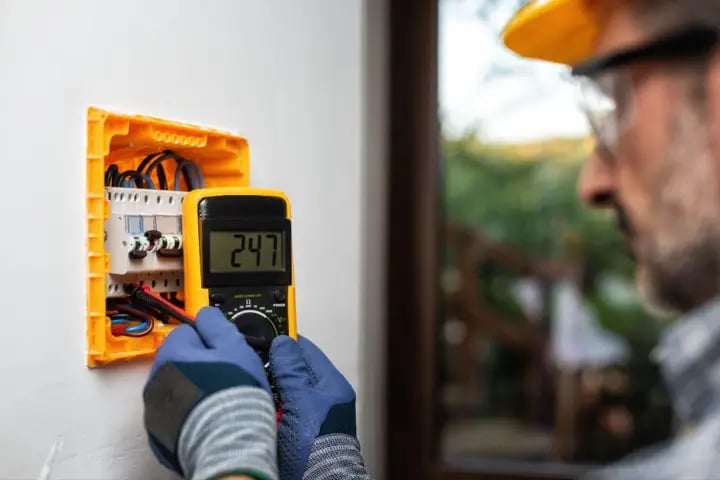
Entering a trade can be an excellent choice for people looking for a rewarding career path. Many trades have historically been very reliable and stable, with clear upward mobility. Opting for an electrician’s path, for instance, is a popular route. Even in a world where AI and automation are becoming dominant, trades are still excelling. This specific trade helps build, maintain, and repair the infrastructure that powers our daily lives. In a bustling state like California, the demand for qualified tradespeople is steady.
However, it’s not as easy as grabbing a tool belt and showing up to punch a clock. For both residential and commercial electrical trades, you must navigate a rigid regulatory process. California enforces very strict guidelines for this trade. All electrical work must be completed safely and up to code. So, it’s important to understand how the state structures its licensing. Figuring out how to become an electrician is the first part you’ll have to navigate. This is the initial step toward reaching your professional goals. During this process, you may discover various developmental stages. The path takes you from an uncertified beginner to a qualified professional. Here are five practical steps that can help guide you on that journey.
1. Register as an Electrician Trainee
If you want to become an electrician, the first step is to register as an electrician trainee. If you’re in California, then you have to register with the state. The California Department of Industrial Relations (DIR) makes this a requirement for anyone performing electrical work. Whether for a contractor or on your own, anyone without a certified journey-level education must register as an Electrician Trainee (ET).
It’s easy enough to qualify for registration. You just have to enroll in an approved vocational training program. There are quite a few accredited electrician schools from which you can choose. Once you have enrolled in an approved school and course of study, you can submit your ET application. You will have to stay enrolled to keep your ET certification active. Your school becomes part of your core foundation for your career.
2. Complete a Comprehensive Educational Program
It’s a good idea to complete a structured educational program. This will give you a massive advantage in the field. This sort of educational training program translates directly to real-world experience. You dive into fundamental topics like electrical theory, blueprint reading, circuitry, and motor controls.
A foundational program also teaches you how to properly read and interpret the National Electrical Code (NEC). The NEC is the benchmark for installations, repairs, safe designs, and other electrical elements across the nation. It’s a dense technical document, but navigating it is part of becoming an electrician. It is crucial for your certification exam. You can learn theoretical knowledge and hone practical abilities. You may enter the workforce with the advantage of being versatile.
3. Gain Mandatory Hands-On Work Experience
As you strive to become a California-certified electrician, you need to put in real hands-on work. To qualify in California for general certification, you need to accumulate 8,000 hours of work experience. This experience has to be under the direct supervision of another certified electrician. This is almost four years of full-time employment as an ET.
During these hours, your daily tasks may include:
- Installing conduit, panels, and lighting fixtures in various structures
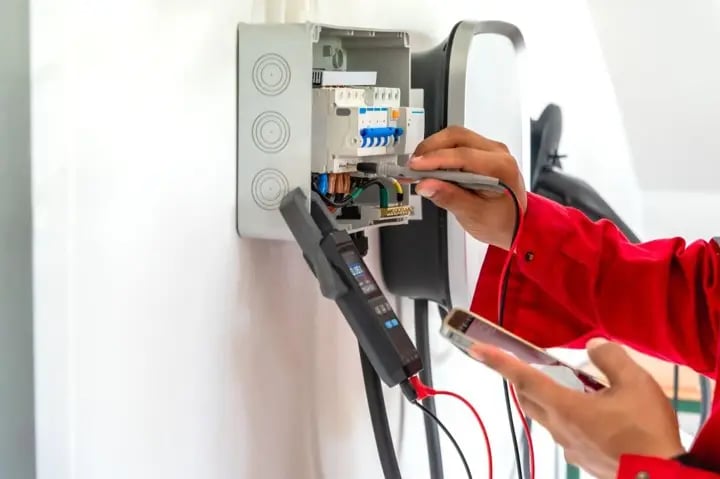
- Testing electrical systems and continuity in circuits using specialized meters
- Troubleshooting malfunctioning systems to identify broken wires or faulty components
- Reviewing architectural drawings to ensure proper placement of electrical boxes
These 8,000 hours must be split up into different types of work. For instance, it cannot all be residential. The state requires commercial and industrial experience, as well. They require this to ensure that all certified electricians are well-rounded in their skill set and can meet any challenge.
4. Master the Practical Timelines and Study Strategies
Many people wonder how to become an electrician within a reasonable time frame. Four years of work seems like a long time. However, it’s important to realize that this is a career journey. In fact, four years to become a certified electrician is a quicker time frame than some other jobs. The track to become a manager from an entry-level position is five years on average. The way you can save more time with the electrician route is to find technical programs that are completed more quickly. Some can be completed in as few as 10 months.
As you reach the end of your required time, you should shift your focus toward exam preparation. The state’s certification test is open-book, but it does have a strict time limit. It’s a good idea to start by taking practice exams and mastering the NEC index. You need to brush up on your math in order to solve complex electrical equations. These steps can help you nail the exam.
5. Pass the State Certification Exam
The state certification exam is the final milestone. The DIR will have to verify that you have completed your classroom hours and your 8,000 ET hours. Once that happens, you can schedule your test.
Other than the subject matter, the test is not really different from tests you’ve always taken in school. You may receive multiple-choice questions primarily. The test is going to evaluate your understanding of safety protocols, the NEC, wiring methods, and state-specific regulations. Any passing score earns you the title of a California-certified electrician. You can then find work with a reputable contractor or go into business for yourself.
As you can see, becoming a certified electrician in California requires a significant investment of your time. It takes hard work, dedication, and years of practical, real-world experience. This does not have to be an overwhelming journey, however. By breaking it down into manageable steps, you can take your time and systematically complete each phase. It’s important to realize that your goal here is to become a skilled electrician, not just to earn a piece of paper. You want to use this time to learn the trade and to become a professional tradesperson. With the right training, focus, and practice, you can become very skilled at your craft and have a fulfilling career.
Copyright © 2026 California Business Journal. All Rights Reserved.
For California Business Journal Disclaimers, go to /terms-conditions/.


