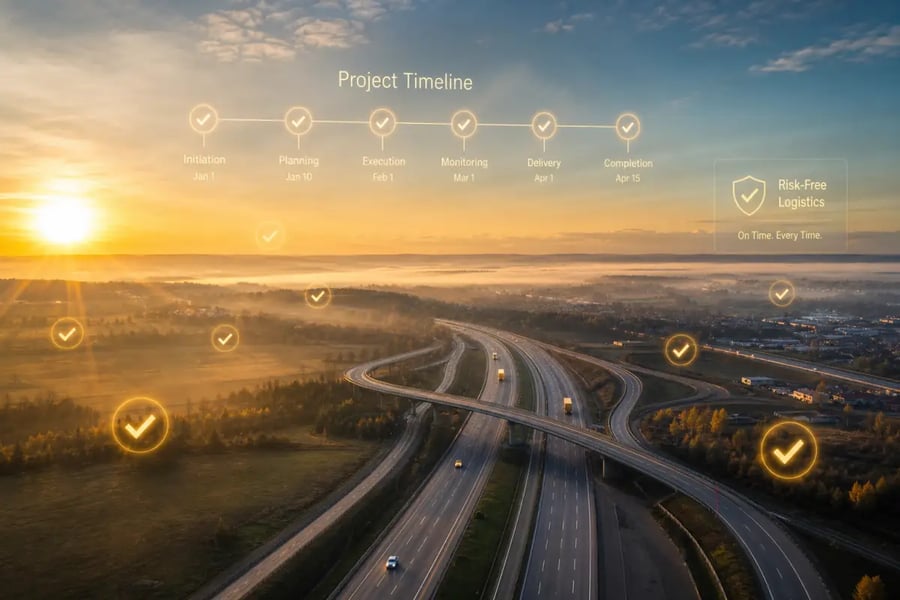
A construction firm books a carrier for a large crane. The route clears internal review and the cargo moves, only for a low bridge to force a last-minute reroute. This error triggers a three-day delay, a missed installation window, and unexpected compliance fees. That sequence is a recurring pattern in heavy haul logistics stemming from avoidable planning gaps rather than bad luck. Executing these four operational steps prevents costly supply chain risks.
1. Know Your Load Before Booking
Establish exact cargo dimensions for height, width, length, and gross weight before contacting any carrier. This specific data dictates which trailer class the logistics team assigns. Skipping the measurement phase results in time loss later, especially when wrong configurations surface during active transit.
Oversized freight and super loads fall into different classifications, since super dimensions trigger specific escort requirements and engineering studies. Operators who fail to account for structural extensions like a crane boom routinely trigger compliance violations.
2. Match Equipment To The Job
Trailer options like flatbeds, step decks, and lowboys serve specific load profiles alongside unique clearance requirements. Choosing the wrong chassis disrupts the loading phase while forcing carriers to seek sudden capacity replacements. Fortunately, specialized trailers like removable goosenecks handle exceptionally tall shipments without exceeding strict height limitations.
Managing project cargo demands rapid coordination across complex equipment arrays and strict permitting limits. For time-sensitive or smaller oversized shipments that cannot wait for standard scheduling, Titan Worldwide Logistics' specialized hotshot trucking offers a dedicated solution built around speed and flexibility, ensuring freight reaches the job site without unnecessary delays.
Taking time to select carriers with deep freight experience pays off by introducing essential route knowledge and continuous pilot car support directly to the job site.
| Important: Choosing the wrong trailer class flatbed, step deck, RGN, lowboy, or drop deck creates the same downstream risk as misclassifying the load. These options are not interchangeable. |
3. Confirm Permits And Routes Early
Permit requirements vary significantly by state, province, and border crossing. Discovering that regulatory variance after dispatch always costs more than early engagement with authorities. Coordinators must flag weight-restricted roads, overhead lines, low bridges, and seasonal restrictions before the cargo leaves the facility.
Cross-border logistics between the United States, Canada, and Mexico demand additional customs documentation and specialized transit coordination. Moving energy components like transformer units to a wind farm site involves multi-state permit requirements that easily add weeks to schedules. Submitting paperwork early ensures a regional processing queue never becomes a permanent budget overrun.
| Key Insight: The cost of discovering permit variance after dispatch is always higher than early engagement. Front-loading permit applications is the most cost-effective risk mitigation step. |
4. Build Concrete Tracking Checkpoints
Define status update intervals at dispatch, state borders, and final approach so stakeholders never chase information when transit windows shift. Ambiguity under time pressure compounds quickly during project cargo operations. One unanswered question about a permit amendment easily stalls an entire receiving team.
Shipment visibility tools reduce the administrative burden associated with manual tracking updates. These digital systems offer project coordinators a specific reference point when weather holds, or minor permit adjustments alter transit schedules. Proactive tracking prevents minor delays from generating severe operational disruptions that impact subsequent construction phases.
The Bottom Line
Addressing cargo dimensions, pulling necessary transit permits, matching specific trailer equipment, and establishing strict checkpoints removes vulnerabilities from the dispatch schedule.
Specialized equipment matching catches physical constraints long before the truck reaches a weigh station. Take time to audit your current logistics framework against these operational steps to locate explicit planning gaps before they disrupt your site.
| Author Profile: Titan Worldwide Logistics is the leading third-party logistics provider of heavy haul trucking and heavy equipment transport solutions for vital industries across North America. |
Copyright © 2026 California Business Journal. All Rights Reserved.
For California Business Journal Disclaimers, go to /terms-conditions/.


