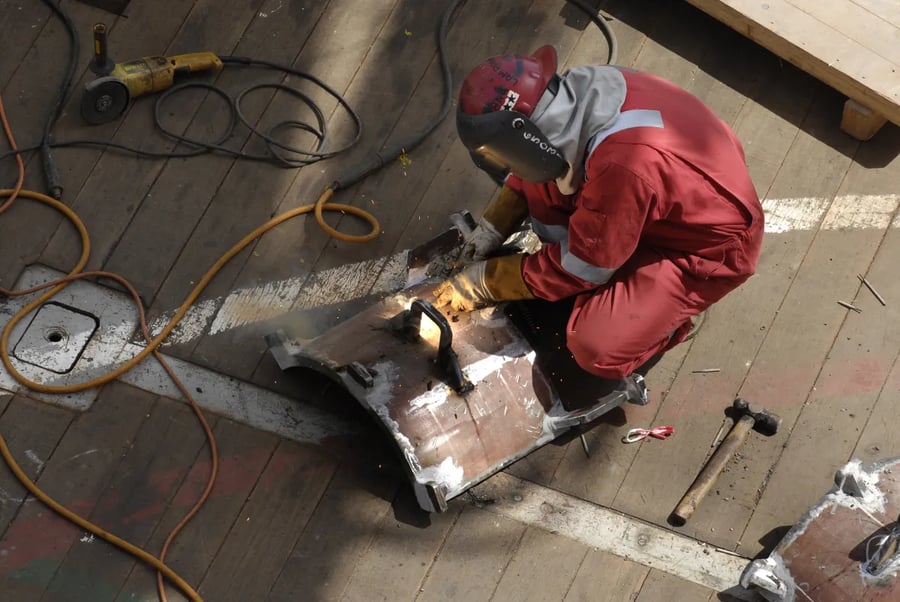
Working in restricted welding spaces poses unique risks. Limited airflow, awkward positions, and proximity to hazards can increase the risks workers face. Following clear guidelines can help reduce accidents and keep everyone safe. This article shares ten practical safety tips for those operating in enclosed welding environments. Let’s discuss and understand each safety tip in the sections below.
-
Assess the Space Thoroughly
A close examination of the surrounding environment can reveal every hazard or risk workers might face before they even start a welding job. Identifying potential hazards such as flammable objects, sharp objects, or unstable ground is crucial for setting up a confined space welding ventilation system. Effective hazard identification makes it possible to prevent accidents before they occur. A list of possible dangers can enable owners and managers to cover every risk that can potentially disrupt operations.
2. Ensure Proper Ventilation
Fumes can gather in tiny spaces. A good ventilation system supports airflow and helps eliminate toxic gases released in the course of welding activities. The use of fans or exhaust systems can also provide fresh air and reduce inhalation risks. Regular checks can help ensure that ventilation equipment functions properly at all times and provides continued protection during every task.
3. Wear Appropriate Personal Protective Equipment
Welding in tight areas requires personnel or workers to wear proper and adequate safety gear. This includes helmets, gloves, flame-resistant clothing, and protective eyewear. Before using any equipment, examine it for wear and tear. Wearing the right clothes and equipment protects against potential burns, sparks, and UV light.
4. Monitor Air Quality Continually
Areas where air is not free to circulate (small spaces) can quickly see a reduction in air quality. Hence, detecting harmful concentrations of poisonous gases or other elements using portable gas detectors is necessary. Furthermore, regular air checks are required to ensure that the environment is safe for everyone. Employees must be trained to watch for danger signs or signals and react quickly when a problem occurs.
5. Keep a Fire Extinguisher Nearby
Welding results in sparks that may lead to fires if the surrounding materials catch fire and ignite. Hence, keeping a working fire extinguisher handy and easily accessible is required as part of an immediate response system. Workers must be familiar with how to use fire extinguishers, and those responsible for such extinguishers must verify that they are fully charged, stored nearby, and kept ready.
6. Maintain Clear Communication
Working in enclosed spaces requires every worker and staff member to communicate effectively. Reliable mechanisms are also required to report safety issues promptly and initiate safety protocols. Everyone on the premises can stay connected through radios, hand signals, or other devices. Frequent check-ups protect everyone in case of an emergency.
7. Limit Entry to Essential Personnel
Only those required for the task and authorized to enter should enter welding sites. Fewer people mean fewer distractions and less risk of injury. Keeping a log of who enters and exits the space can improve overall control and accountability during welding activities.
8. Remove Flammable Items
Flammable materials must be removed from the area when welding work begins. This includes, for instance, solvents, rags, and unused gas cylinders. Reducing the risk of accidental fires and explosions by keeping sparks away from these items is essential.
9. Provide Adequate Lighting
Adequate visibility is important for safe work in enclosed spaces. Explosion-proof portable lights are needed in dark spaces on the shopfloor or factory premises. Adequate illumination reduces the possibility of accidental contact with hot surfaces or failure to recognize vital aspects of the procedure. All in all, this reduces the likelihood of calling emergency services.
10. Have a Rescue Plan Ready
Safety also means preparing for emergencies. No team on a job site should ever be left completely alone, and every team should have a quick plan for rescuing people if an adverse event happens. This includes familiarizing employees with emergency protocols alongside the ready availability of recovery tools. Coordinated action in emergencies can prove life-saving.
Conclusion
Safety in confined welding spaces depends on careful preparation and awareness. Following these ten tips can help factory owners and managers protect their workers from avoidable injuries and health hazards. Regular training, clear communication, and the right equipment create a secure environment for every welding task. By prioritizing each step, teams can complete their projects efficiently while minimizing risks. Building responsible actions leads to the creation of safer workplaces for everyone.
Copyright © 2026 California Business Journal. All Rights Reserved.
For California Business Journal Disclaimers, go to /terms-conditions/.


