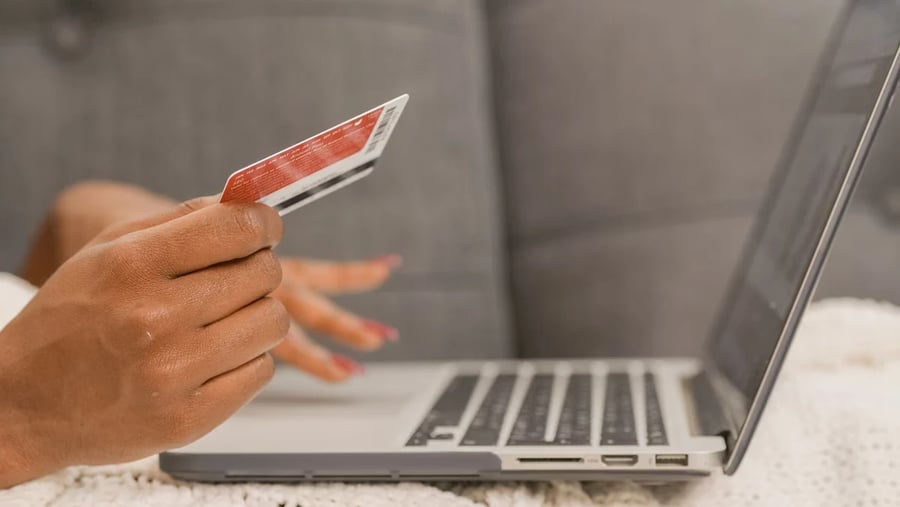
The average US checkout shows 23.48 form elements by default, according to benchmark data from the Baymard Institute, while usability testing suggests that 12 to 14 are enough. One click checkout reduces that count to a single button for customers whose details are already on file. For a retailer that spends money to bring the same buyer back every month, those removed fields apply to the orders it has the best chance of winning.
Fewer Fields at the Final Step
Baymard puts the average cart abandonment rate at 70.22%, and 42% of US shoppers in its 2026 survey said they had left a cart because they were browsing with no plan to buy. A faster button will not change the behavior of that group. The figures that one click checkout can influence are smaller and easier to act on. In the same survey, 18% of respondents had abandoned a purchase after being asked to create an account, and 17% had left because the process was too long or complicated.
A customer who is signed in and has a saved card avoids both obstacles. Baymard estimates that $260 billion in lost orders across the US and EU could be recovered through better checkout flow and design alone. The US Census Bureau estimated online retail sales at $340.2 billion for the second quarter of 2026. At that volume, a change of 1 percentage point in completion represents a large sum across the market and a measurable one for a single store.
Replenishment Goods
The format is most useful for products that people buy repeatedly and do not need to research again. Pet food, vitamins, printer ink, and coffee fit this description because the buyer already knows the brand, the size, and the price. Angela Edwards of the marketing agency Catapult told Digiday in 2017 that online grocery was a likely fit, because shoppers restocking a pantry are not browsing for product information.
A shopper comparing mattresses wants to read the return terms and review the delivery date, and a prominent instant-purchase button on that page offers little. Retailers with mixed catalogs often limit the button to items the customer has bought before.
A shopper who skips the cart also skips the prompts that add a second item, so single-item orders can raise shipping cost per unit. Some small retailers hold a one click order for a short period and merge any further purchases into the same shipment, which recovers part of that loss.
Subscription programs and one click reorders serve the same customers by different means. A subscription commits the buyer to a schedule, while a one click reorder lets the buyer decide each time, and some customers who refuse a subscription will accept the second option.
Purchases on Phones
Typing card and address details on a phone takes longer and produces more errors than the same task on a keyboard. Forbes Advisor reported that mobile commerce accounted for $491 billion in sales in 2023 and projected $856 billion by 2027, which makes the phone the device where removing fields saves the most effort. A retailer's own analytics will show how far mobile completion trails desktop completion, and that gap is the upper limit of what the feature can recover on small screens.
Credential Storage Requirements
A saved card has to be charged with no further input from the shopper. One click checkout therefore requires ecommerce payment processing that can charge a stored credential directly. The retailer's database typically stores a token that works only for that retailer, so a stolen copy has little resale use. The customer must agree to the storage, and the card networks expect the merchant to record that agreement along with the terms under which the card will be charged.
An outdated shipping address produces a correctly charged order at the wrong house, and the retailer usually pays for the reshipment. Printing the destination on the button itself, in the form "Buy now, ship to Elm Street," adds no step and exposes errors before shipment.
Login Methods for Returning Shoppers
The button disappears for anyone who has been signed out. Session length is therefore a commercial decision as well as a security decision, and a retailer that logs customers out after 15 minutes has removed its own feature for most return visits.
Passkeys work through public-key cryptography, with a private key kept on a device the customer owns and usually protected by a fingerprint or face scan. The customer confirms identity with one touch and has no password to forget or reuse, which removes the forgotten-password step for people returning after several months.
Spending Effects of Faster Purchases
Evidence from physical retail suggests that speed raises spending. A 2024 paper in the Journal of Economic Behavior & Organization found that contactless payment caused less discomfort than cash and that people using it spent more. An online purchase completed with a single press removes the moment of payment method to a similar degree, although the study did not test online checkout directly.
A 2023 survey cited by CNBC Select put average spending on impulse purchases at $151 a month, and a 2026 survey reported by Retail Brew found that 81% of consumers had already made an impulse buy that year. Retailers benefit from those sales at the point of purchase and bear part of the cost when regret turns into a return.
The 1999 Patent
For nearly 2 decades, the format was difficult for most retailers to adopt. Amazon's 1-click buying patent was issued in 1999 and expired in September 2017, and until then retailers went without the feature or paid Amazon a licensing fee. The expiration opened the method to any store with stored customer credentials.
Safeguards Against Accidental Orders
Removing steps also removes chances for a person to stop. The best-known public example involved children. Amazon began issuing $70 million in refunds in 2017 for unauthorized in-app purchases made by children, after a Federal Trade Commission suit, and its store had not required passwords for those purchases until 2012.
A retailer can keep the speed and limit that exposure through a few controls. A cancellation window of 30 minutes gives the customer time to reverse a mistaken press, and an immediate confirmation by email or text makes the charge visible to the account holder. Requiring a passkey or a fingerprint for orders above a set value protects households where a phone or tablet is shared.
Fraud is the second exposure. A criminal who takes over a customer's login can place orders with a single press, and a stored card makes each order easy to repeat. Retailers commonly respond with limits on the number of orders per hour, extra verification when a new device appears, and a hold on any order sent to a newly added address. These checks apply to a small share of sessions, so the ordinary returning customer does not encounter them.
A 30-Day Pilot for Repeat Customers
Enable the button first for signed-in customers who have completed at least 2 orders and have a saved card and a confirmed address. Compare their completion rate with a control group for 30 days, and count cancellations made within the first hour as a separate measure, because that number shows how many of the added orders were mistakes. If the cancellation share exceeds the gain in completed orders, narrow the button to replenishment goods before expanding it.
Copyright © 2026 California Business Journal. All Rights Reserved.
For California Business Journal Disclaimers, go to https://calbizjournal.com/terms-conditions/.


