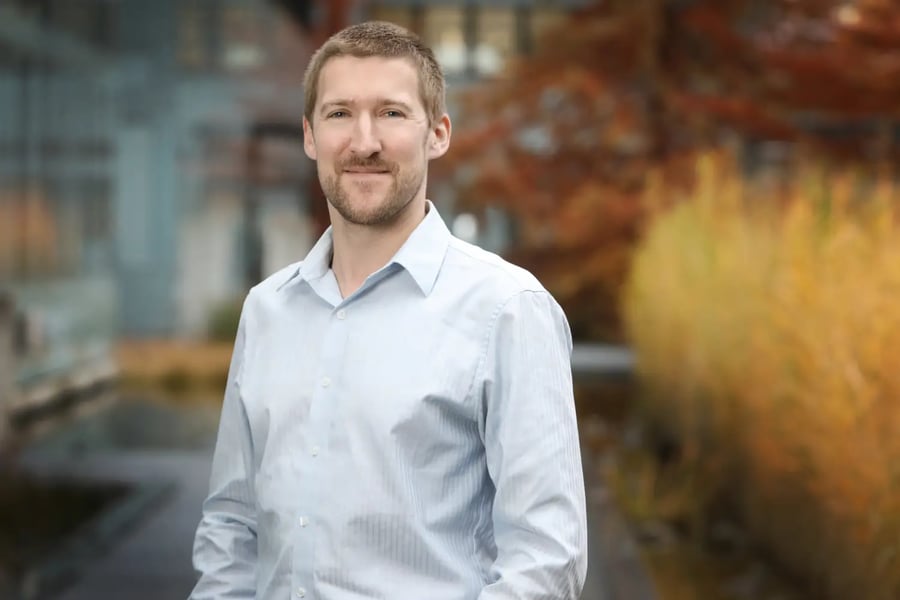
As artificial intelligence sweeps through every corner of business, many leaders are racing to automate as much as possible. But according to consultant and systems strategist Georg Meyer, it’s precisely in this rush toward automation where companies risk losing something essential — the irreplaceable human layer that makes organizations adaptive, resilient, and humane.
“Automation is great if you can plan for all the cases that need to be handled,” Meyer explains. “But humans bring a lot of value in handling unique situations, and many unique situations are created by other humans.”
He offers a simple example: an employee giving notice. An automated workflow can instantly unenroll them from benefits, trigger exit paperwork, and close their accounts, but a human would pause long enough to understand why they’re leaving. “It’s very different whether somebody is unfulfilled by their work or their commute is too long,” he says. “Sometimes, a satisfactory solution can be found, and the person takes the resignation back.”
Meyer has seen it firsthand. A talented developer once “unresigned” after Meyer realized the employee wasn’t unhappy with the company — he was underutilized. The solution wasn’t a salary change or a forced retention pitch. It was giving him a chance to contribute his skill in user experience design. “It ended up as a true win-win,” he recalls. “This is the kind of opportunity that can be easy to miss if you automate the wrong things.”
When Complexity Becomes the Real Cost
Beyond AI, Meyer believes many organizations are struggling because their internal systems have quietly become more complex than they can handle. You can see it, he says, in how difficult it becomes to make even small changes.
“One early warning sign is how many people you need in a room to figure out how to update something — and how long you have to wait for all the tickets to move through,” he says.
He shares a striking example: some suppliers took five years to implement a new labeling requirement, while others managed it in just a few months. “The difference was that the fast ones had relatively simple systems with clearly defined responsibilities,” Meyer says. The others had layered platforms, multiple vendors, and no clean ownership. “They had to get a dozen people into a room before they could even begin to discuss the change.”
Leadership in 2025: Stop Chasing the Crowd
When asked what mindset shift leaders need most in 2025, Meyer doesn’t hesitate: stop reacting out of fear, and start acting from conviction.
“We see companies engaging in fear-driven knee-jerk reactions. ‘All our competitors are doing X — we need to jump on that train ASAP.’ Instead, leaders need a vision for their business so they can determine how to react in line with who they are and what actually serves their customers.”
This is especially visible in the AI frenzy. “When all the competitors are rushing to build AI into their products, it takes courage to say: we’re not doing that, because we know our product serves customers better without it.”
For Meyer, the companies that thrive aren’t the ones that copy fastest — they’re the ones grounded enough to know when not to follow. “Businesses that stay focused on solving the customer’s real pain points, rather than adding pointless features, tend to be rewarded,” he says. “And they save a lot of money by not investing in the unnecessary.”
The Takeaway
In a business world obsessed with acceleration, Meyer is a voice calling for discernment. Not less technology, but clearer thinking. Not less efficiency, but more imagination. Not fewer tools, but better judgment about where people are the real differentiator.
Because in the end, he argues, the competitive edge isn’t always found in building faster systems — it’s in remembering what only humans can see.
Copyright © 2025 California Business Journal. All Rights Reserved.
For California Business Journal Disclaimers, go to /terms-conditions/.


