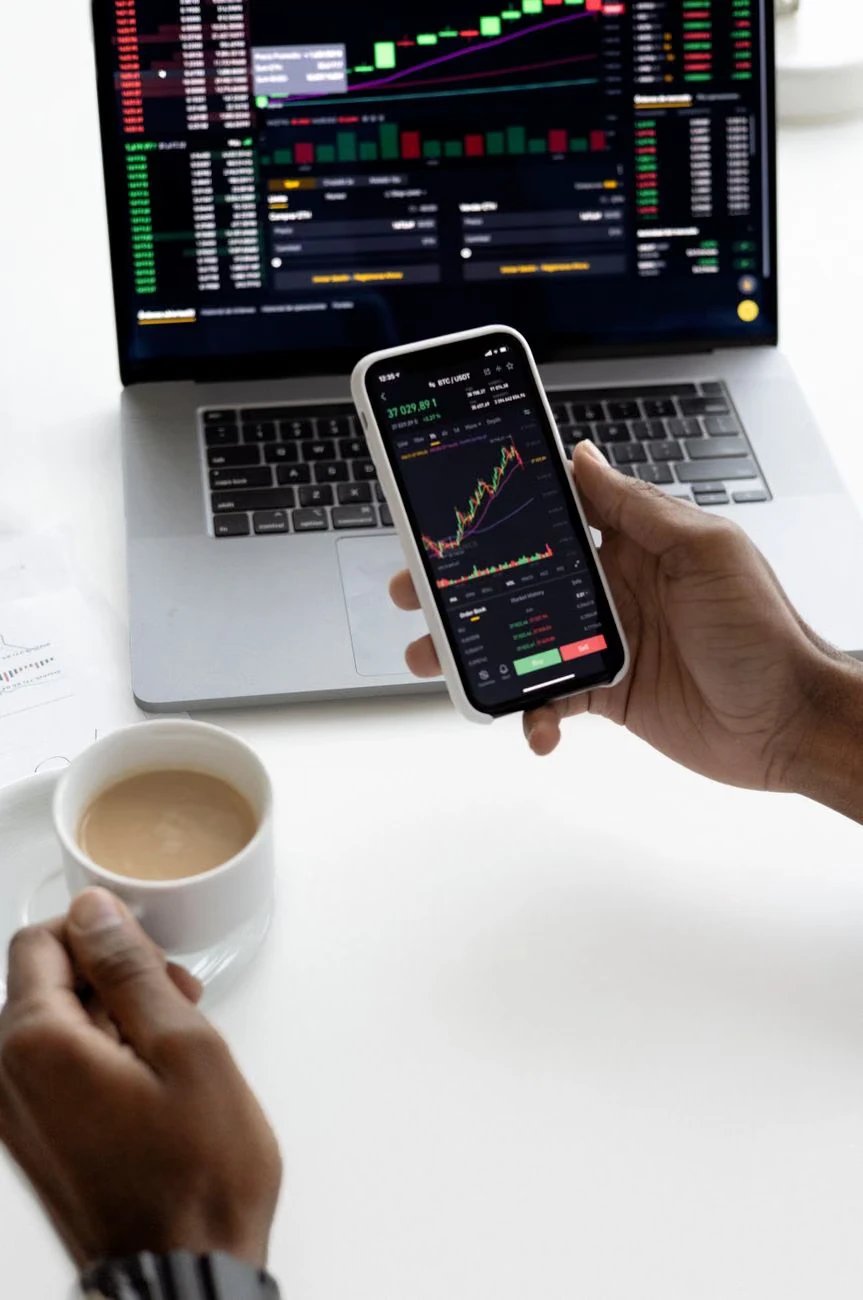
Modern financial markets operate at extraordinary speeds. Algorithms analyze price movements, artificial intelligence interprets economic signals, and sophisticated platforms execute transactions in fractions of a second. Yet behind this technological infrastructure remains an element that automation cannot fully replace: human judgment. As financial markets become increasingly dependent on machines, the relationship between technology, trust, emotion, and personal decision-making is becoming central to online trading.
The Digital Trading Revolution Still Has a Human Heart
Digital trading has transformed access to global financial markets. Professional traders can monitor currencies, equities, and commodities from anywhere, using tools that once required expensive institutional infrastructure. However, the apparent simplicity of executing transactions conceals a complex financial ecosystem where human understanding remains essential.
Automation has improved order routing, market monitoring, and transaction processing. Algorithms can recognize patterns, evaluate indicators, and execute instructions without hesitation. Nevertheless, technological efficiency does not automatically produce sound financial decisions. Determining whether an opportunity aligns with broader financial objectives requires contextual understanding and strategic judgment.
Financial markets are influenced by political decisions, economic developments, corporate behavior, and investor expectations. Even advanced automated systems operate within predefined assumptions. When those assumptions become unreliable, human oversight provides an important safeguard against excessive confidence in technology.
Why Personal Relationships Matter in a Market Built on Machines
Competition among trading providers increasingly extends beyond execution speeds and analytical capabilities. Professional traders require reliable infrastructure alongside effective communication, during technical interruptions, unexpected transactions, or challenging market conditions. Responsive human assistance can become as valuable as the underlying software.
This combination of advanced technology and individualized attention is reflected in the positioning of certain specialist trading providers. Vellouris, for instance, presents its offering around institutional-grade trading infrastructure, straight-through-processing execution, global market access, and personalized services for professional and institutional clients. Its approach illustrates a broader industry proposition: sophisticated execution technology need not come at the expense of direct client relationships. For traders evaluating such services, however, the important questions extend beyond premium positioning to include execution quality, transparent costs, regulatory status, and the practical availability of support. The value of a personalized relationship ultimately depends on whether the provider can deliver meaningful assistance when market conditions become demanding.
The complexity of financial products further reinforces the importance of personal relationships. Technology can consolidate information and automate repetitive processes, but trust develops through consistent service and transparent communication. Knowledgeable representatives can clarify operational procedures while traders retain responsibility for their financial decisions and risk exposure.
Algorithms Can Process Risk, but They Cannot Experience Fear
Financial markets are influenced not only by economic fundamentals but also by fear, ambition, uncertainty, and collective behavior. Rapid losses can encourage impulsive decisions, while consecutive profitable transactions may create excessive confidence. Technology has accelerated the speed at which these emotional reactions can produce financial consequences.
Automated systems can help address behavioral vulnerabilities by following predefined instructions without emotional interference. However, automation introduces other risks, including flawed assumptions, inappropriate parameters, and unexpected responses to unfamiliar market conditions. Strategies that perform consistently under normal circumstances may struggle when liquidity deteriorates or historical relationships change.
An effective balance involves assigning different responsibilities to technology and human decision-makers. Software can monitor exposure, enforce predetermined limits, and generate alerts. Human operators can evaluate whether those parameters remain appropriate. Effective oversight requires distinguishing circumstances that justify intervention from those where established risk controls should remain in place.
The Information Paradox: More Data, More Difficult Decisions
Contemporary traders have unprecedented access to economic releases, corporate disclosures, market sentiment indicators, and geopolitical developments. Artificial intelligence can summarize information and identify relationships across extensive datasets. However, greater access to information does not necessarily make financial decisions easier.
A central-bank announcement, for example, can trigger immediate reactions across multiple markets while investors disagree about its longer-term implications. Even favorable economic data can produce negative market reactions when expectations were higher. Understanding these distinctions requires contextual awareness that extends beyond automated classifications.
AI-generated analysis can also present conclusions with an appearance of certainty that exceeds the underlying evidence. Traders must remain aware of incomplete datasets, conflicting indicators, and model limitations. Financial literacy increasingly involves understanding both markets and the technologies used to interpret them.
Trust and Accountability in an Automated Marketplace
Digital trading has improved operational efficiency while complicating questions of transparency and accountability. Transactions pass through multiple layers of software, connectivity infrastructure, liquidity arrangements, and risk controls. During volatile conditions, execution delays, wider spreads, and pricing discrepancies can expose the importance of these underlying processes.
Trust cannot be established through sophisticated interfaces or marketing claims alone. Traders need clear information about the legal entity providing services, its regulatory framework, applicable costs, and available protections.
Understanding financial instruments is equally important. Leveraged derivatives, including contracts for difference, can amplify losses as well as gains. Transparent explanations of margin requirements, transaction costs, and liquidation procedures are therefore essential before capital is committed.
Human accountability remains fundamental when operational problems arise. Software records can help reconstruct disputed transactions, but people must investigate circumstances and communicate outcomes. Clear escalation procedures, knowledgeable personnel, and accessible reporting can strengthen confidence in increasingly automated financial services.
The Future of Trading Belongs to Those Who Understand Both Technology and People
The next stage of financial-market development will likely involve more sophisticated artificial intelligence, automated analysis, and integrated trading infrastructure. These developments could improve operational efficiency and expand access to professional trading capabilities. Nevertheless, technological progress will not eliminate uncertainty or guarantee responsible financial decisions.
The professional trader's role may increasingly emphasize strategic thinking, risk governance, and evaluating automated recommendations. Instead of spending extensive time monitoring individual price movements, traders may focus more on determining which opportunities justify taking risk.
Education will remain essential throughout this transition. Understanding leverage, liquidity, execution quality, and model uncertainty will continue to matter regardless of technological sophistication. The most capable market participants may not be those who automate the greatest number of activities, but those who recognize which decisions require human scrutiny.
Technology should therefore be understood as a means of supporting informed decisions rather than replacing independent judgment. Its usefulness depends on the quality of the assumptions, oversight, and objectives guiding its application.
Ultimately, increasing automation raises an important question about what becomes more valuable when machines perform more of the work. In online trading, the answer lies in judgment, integrity, adaptability, and relationships built on trust. Algorithms can accelerate transactions and process extraordinary amounts of information, but responsibility remains with individuals and financial institutions. The enduring advantage in an increasingly automated financial world may be the ability to combine technological sophistication with distinctly human qualities.
Copyright © 2026 California Business Journal. All Rights Reserved.
For California Business Journal Disclaimers, go to https://calbizjournal.com/terms-conditions/.


