Beyond Menu explains how Google, social media and other platforms help drive customers to restaurants, and why independent restaurant owners need to take control of the process.
Today, customers can find new eateries through dozens of channels. When hunger strikes, diners may check out a restaurant a friend recommended, search on Google, scroll social media for inspiration or choose the convenience of a delivery app.
Beyond Menu helps restaurant owners set up a digital presence to connect via some of these channels. According to Rodney Cox, president and CTO of Beyond Menu, Google is a huge factor, and if restaurants don’t prioritize their own first-party site, they may lose out to delivery apps in the search results.
“Google is the front door. Someone searches for tacos near them, and Google gives them a way to order. If the restaurant doesn’t have its own ordering site, that way is DoorDash or Uber Eats,” he says. “The fix isn’t complicated. Fill out your Google profile, point the order button to your own site and post a good photo that loads fast. That’s what Google cares about. Otherwise, the restaurant earns the search, and a delivery app gets the order.”
Cox explains more about how Google, social media and delivery apps drive customers to eateries and how independent restaurants can compete online.
How Do Restaurants Get Customers From Google?
Google helps people find restaurants to try through Google Search and Google Maps.
Search refers to the search bar and results page; people type queries like “tacos near me,” and Google provides results that include URLs to websites, Local Pack map listings and other options. Browsing on Google Maps typically means scanning for options nearby or along a route, instead of typing a query into search.
Restaurants can show up in both tools through local discovery and search efforts, encouraging reviews, paid search and direct order integration.
Local Discovery and Search
According to BentoBox's 2023 Diner Journey Report, 86% of diners use online research to find new restaurants, and nearly as many rely on personal recommendations. When users search online, Google pulls information from business listings and websites to populate search results pages and map results. Restaurants can show up better online by:
Completing their Google Business Profile. Fill in the address, phone number, hours (including holiday hours), primary category, price range and attributes like outdoor seating, vegetarian options or takeout.
Adding current menus to sites and profiles. A menu on the profile and website helps the restaurant show up when diners search for a specific dish.
Posting fresh photos. Images of signature dishes, the dining room and the storefront give searchers a preview and help them recognize the spot when they arrive.
Linking to their own ordering pages. Setting the profile’s website and ordering links to the restaurant’s own site keeps search traffic from defaulting to delivery apps. Owners can also remove third-party ordering links from the profile. If a diner has already found the restaurant on Google, sending them to DoorDash or another delivery app can mean paying a commission on an order the restaurant attracted itself. Linking directly to the restaurant’s own ordering page helps it keep more of that revenue.
Keeping website details consistent. Matching the name, address, phone number and hours across the website and profile helps Google and AI Overviews confirm the information and recommend the restaurant with confidence.
Reviews help diners quickly understand what a restaurant offers, including its quality, before they order or go out to dinner. About half of consumers (49%) trust online reviews as much as personal recommendations, according to BrightLocal's Local Consumer Review Survey, so ask satisfied customers to leave feedback on Google or other sites like Yelp.
You don’t need a perfect five-star rating to benefit from reviews. A few dozen recent reviews, even with some mixed ratings, can:
Improve visibility in search and map results
Demonstrate to potential customers that your restaurant is open, active and getting regular traffic
Give hesitant diners more confidence in placing a first order with you
Paid Search
Paid search ads can put a restaurant at the top of Google results while organic SEO builds over time. New restaurants and locations often rely on paid search to gain visibility in the months before reviews and rankings catch up. Established restaurants can use ads to promote new menu items, seasonal specials or events.
Direct Ordering Integration
In 2019, Google added an Order Delivery button to search results that pushed consumers to delivery services like DoorDash or, in rarer cases, brand-direct ordering options. Over the years, Google has pushed, scaled back and pushed again on this initiative.
“Google has gone back and forth on that order button,” says Cox, “but the logic hasn’t changed. Google wants to show diners a convenient way to order. If the restaurant doesn’t offer one, Google will point them to a delivery partner that does. The simplest fix is to set the ordering link on your Google Business Profile to your own ordering page.”
Does Social Media Help Restaurants Get Customers?
According to PYMNTS' Connected Dining report, 88% of diners use online reviews and recommendations on social platforms to decide where to eat, and nearly 22% will return to a restaurant based on its social media presence alone.
Visual Appeal
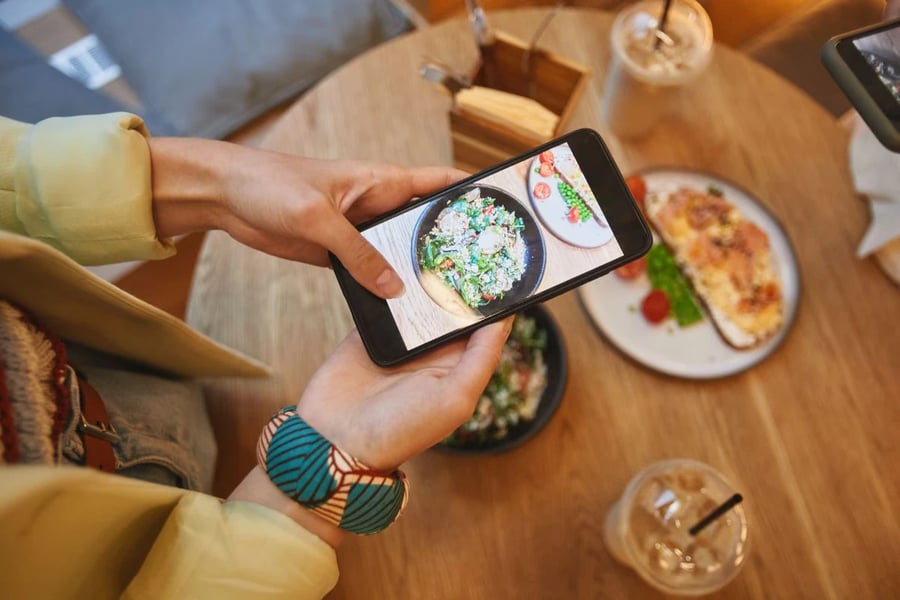
Social media’s image-heavy design plays to restaurant strengths. A well-lit photo of a signature dish or a cozy dining room gives potential diners a preview of the experience. User-generated content, including photos of friends’ plates at a restaurant, often appears repeatedly in local customer feeds, creating marketing touchpoints that drive conversions.
Trust Signals
Comments, photos and likes from other people act as social proof. When friends or local creators rave about a meal, other customers listen. They may also remember those social media mentions more than they would traditional advertising.
FOMO
A restaurant that keeps showing up in someone’s social media feed starts to feel like the place everyone else is trying. Even a little buzz can nudge people to visit sooner, and that effect grows when social media meets seasonal specials or new location openings.
How Do Delivery Apps Help Restaurants Get Customers?
Delivery apps give restaurants instant exposure to a built-in audience. Millions of people already open these apps when they’re hungry, ready to browse and order from their phones, so a listing can reach diners who might not otherwise find the restaurant. Benefits of delivery apps can include:
Large, active user bases. Platforms like DoorDash, Uber Eats and Grubhub put a restaurant in front of people who order food regularly.
Algorithm-driven discovery. Apps recommend restaurants based on each user’s order history, location and preferences, so listings reach people who are more likely to order.
Built-in delivery infrastructure. Drivers extend a restaurant’s reach to customers who want to eat at home, without the cost of running a delivery fleet.
Low-friction ordering. Saved payment details, reorder buttons and real-time tracking make it easy for a first-time customer to place an order.
Cox says delivery apps also come with trade-offs, especially for independent restaurants. “Delivery apps are a real channel, and I’m not going to tell an owner to shut them off. That said, the app owns the customer. One of our owners had a diner who had ordered from her 200 times on Uber. That’s a regular. She paid a commission on every one of those orders and still had no way to reach that person directly.”
Platforms take a percentage of each order, which can cut into already-thin margins
The apps own the customer relationships, making it harder for restaurants to build repeat business
Listings sit next to dozens or hundreds of nearby competitors, and better placement may cost
Restaurants don’t have control over drivers, but late drivers or poor driver service can lead to negative reviews for the eatery
Algorithm and fee structure changes on platforms can shift restaurant order volumes overnight, leaving teams unprepared for the change
How Beyond Menu Helps Restaurants Get Customers
Beyond Menu provides many of the tools covered above in a single platform for independent restaurants.
Operating for more than a decade, the company offers:
Custom restaurant websites. Each partner gets a website built as part of onboarding, giving it a first-party home for search traffic.
Direct online ordering. Diners can order pickup or delivery through the restaurant’s own site. Beyond Menu currently offers new partners a mix of monthly subscription and low-commission plans.
Automated review collection. Built-in tools help restaurants build the steady flow of recent reviews diners look for.
Automated retention and coupon campaigns. Bring back past customers with promotions and coupon offers.
Marketplace exposure. Partner menus appear on the Beyond Menu marketplace and mobile app, putting them in front of diners looking for independent restaurants.
Copyright © 2026 California Business Journal. All Rights Reserved.
For California Business Journal Disclaimers, go to https://calbizjournal.com/terms-conditions/.


