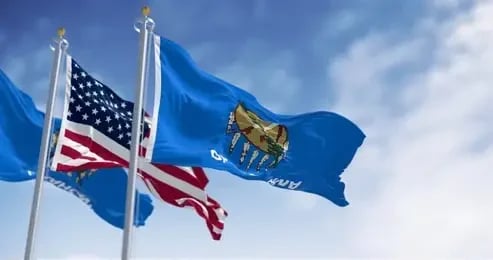
San Pasqual’s fuel station is tucked into a curve on the way into Valley Center in northern San Diego County. At first glance, it looks like any other gas station. But behind the scenes, it works very differently. Rather than operating as simply a business, the fuel station and its amenities are part of the San Pasqual Tribe’s economic development engine and its profits are used to directly improve the lives of community members, employees and their families.
”Everything we charge above the acquisition cost literally fuels the tribe’s prosperity,” says Matt Quis Quis, vice-president of the San Pasqual Economic Development Corporation (EDC), the tribal institution empowered to support diversification of the tribe’s economy beyond gaming. Not only does the business support tribal programs and workforce development but these changes are starting to reach beyond the reservation as well.
Sovereignty as business architecture
To many outside investors, tribal sovereignty sounds abstract. For San Pasqual, it’s something they put to work every day.
On the cost side, sovereignty allows the tribe to strip away state sales taxes on materials purchased for construction on trust land. “Businesses know that we’re exercising our sovereignty, and they do not have to charge us state sales tax on those materials,” says Matt Quis Quis. Steel, concrete, and other inputs for new projects arrive without state sales tax attached, lowering capital costs from day one.
On the revenue side, sovereignty opens health-care opportunities where San Pasqual can fill the need for rural wellness programs and health care for their tribal citizens and non-tribal neighbors.
The tribe is in the middle of setting up an after-hours healthcare center on tribal land. “Our status as a nation means we’ve been able to establish this health center as an additional business operated through our tribal economic development corporation. So the health care services provide better physical health while the revenue benefits members of the tribe and better ensures economic self-sufficiency and fuels actual prosperity and health.
Diversification beyond the gaming
California’s tribal economies still rest heavily on gaming. Tribal gaming in the state supports more than 184,000 jobs and an annual economic impact of roughly $34.6bn, according to industry estimates. But the tribes that are thinking hardest about resilience are those treating casino revenue as a platform, not an endpoint.
San Pasqual is one of those tribes. Its EDC now leads non-gaming development for the tribal government, working to expand the tribe’s land and diversify its business mix.
The fuel center was just the beginning. Since then, the tribe has opened a Ziggi’s coffee shop, expanded the golf course for bigger events, and is planning a car wash for 2026. They’re also working to open the first grocery store in Valley Center. Matt Quis Quis says they plan to add another fuel center on the other side of town, giving drivers two places for cheaper gas.
Katherine Spilde, a professor at San Diego State University and long-time analyst of tribal gaming, sets San Pasqual’s strategy in a national context. The tribe, she notes, is geographically isolated, without a major city on its doorstep. Yet by building a cluster of amenities—hotel, restaurants, entertainment, fuel, coffee, soon groceries—it has managed to attract visitors and “expand their relationship with each visitor: if they stop and buy gas, if they get coffee, if they get a car wash, maybe they’ll stop and get their groceries when the grocery store opens,” Spilde says.
Diversifying helps tribes manage risk and grow. Tribal gaming now faces more competition from commercial casinos, lotteries, and online betting. At the same time, new businesses bring more jobs, more career choices, and stronger local suppliers. Tribes across California have been adding facilities such as RV parks, retail, energy, farming, banking, and real estate for years.
A second example of how California tribes are leveraging sovereignty to advance large-scale commercial ventures comes from the Sycuan Band of the Kumeyaay Nation, which recently became a co-owner of Major League Soccer’s newest franchise, San Diego FC. The tribe invested more than $200 million into the $500 million expansion team, the most significant direct investment in a U.S. sports franchise by a federally recognized tribe, and built the club’s performance center and academy on Sycuan tribal land. In doing so, the tribe leveraged sovereign jurisdiction to accelerate construction timelines that would otherwise be slowed by California’s regulatory environment. As Chairman Cody Martinez noted, tribal land provided “a fully aligned municipality… that has so much motivation to eliminate the red tape that typically holds projects up in California,” enabling the club to open a 50,000-square-foot facility and five training fields in just 14 months. The investment could prove especially well-timed, coming just as interest in the 2026 World Cup, jointly hosted by the US, began to spike.
Sycuan’s investment is part of a bigger trend. Tribes are moving beyond hospitality, retail, and real estate, and stepping into bigger industries like professional sports. For Sycuan, the reasons are similar to those of other tribes: diversify, build a steady income, and create skilled jobs for tribal members. Martinez says the investment was a chance to do something special, bringing together culture, business, and sovereignty. The new training center for San Diego FC is now a key part of a growing sports hub in East San Diego County, on land where the Kumeyaay have lived for thousands of years.
A labor market, not just a revenue stream
For San Pasqual, diversification is as much about people as it is about balance sheets. “All of this is ultimately to benefit the tribe,” says Justin Quis Quis. “You’ve got the coffee shop, you’ve got the fuel center, the urgent care, and the pharmacy, and then we’ve got a car wash coming up. The more different revenue sources we can have, the better it’s going to help all of those departments,” he adds. The tribe now runs its own fire department and police department, among other services.
Spilde says this makes a real difference for workforce diversification as well. The casino still employs about a thousand people at San Pasqual, but not everyone wants to work there. The tribe’s other businesses—like the convenience store, coffee shop, golf course, and soon the grocery store—offer plenty of entry-level and non-gaming jobs. These are especially helpful for tribal members and young people starting. From there, they can move up in the casino or even launch their own businesses.
The new health-care center will also help people learn new skills. Matt Quis Quis says some of the profits will help anyone on the reservation who wants to train as a nurse or in another health job. So health care is not just about making money; it’s about helping people start new careers.
San Pasqual also projects its economic presence outward through philanthropy. The golf course hosts fundraising tournaments for the local high school’s sports teams; tribal government supports chamber-of-commerce initiatives in nearby Escondido. “We also try to support local businesses as well. We’re definitely building a stronger community,” says Matt Quis Quis.
All of this makes a big difference beyond the tribe. Tribal businesses create jobs for local people, hire nearby suppliers, improve roads and buildings, and support schools and community groups. Studies show these benefits add up to billions of dollars and tens of thousands of jobs across California.
From government to the grocery aisle
Justin Quis Quis’s story is another example of tribal economic growth. He moved from working in tribal government to starting his own business.
After roughly 20 years working in tribal government, he says, “I just needed to find a way to give back to Native communities under my own volition. I’ve always had an entrepreneurial spirit; I just couldn’t find a vehicle to do it.” That vehicle turned out to be beverages. With a friend from the industry, “after a lot of R&D, we came up with Sacred Bev. It’s a non-alcoholic, sparkling herbal beverage based on Native American remedies and recipes, and we were able to get three different drinks out of it.”
The company, Sacred Bev Native Wellness, is for-profit but has a clear mission to give back. Justin Quis Quis says that as the company grows, they can help more people. Their heritage is a big part of what makes the brand different, but he knows the drinks have to taste great first. They’re working on new flavors, and in the future, they might add snacks or protein bars too.
In California’s tribal economy, Sacred Bev sits in a growing field of Native-owned consumer brands that channel cultural reference points into mainstream markets. They depend on the same enabling conditions as San Pasqual’s fuel station or planned grocery store: Predictable access to capital, reliable infrastructure, and, often, skills and networks built within tribal enterprises before being brought into the broader market.
The next decade: more than cheap gas
Over the next five to ten years, San Pasqual’s primary goals are clear: Open the health-care center, finish building the Albertsons, expand the golf course, and get the car wash and second fuel center up and running. After that, Matt Quis Quis says they’ll keep looking for new business ideas, as long as they can find the funding.
Across California, the same pattern is visible at scale. Tribal gaming remains a “powerful economic engine.” Still, tribes are pushing more capital into non-gaming lines, from logistics to renewable energy, in part to hedge against regulatory and competitive shocks. At the federal level, policymakers have finally begun to treat access to capital on tribal lands as a distinct policy problem, launching multi-agency initiatives to improve financing flows to tribal governments, enterprises, and Native entrepreneurs.
It’s not always easy. Tribes still face complex rules governing trust land and must work with several layers of government. Getting loans is tough because it’s hard to figure out the value of trust land.
But San Pasqual shows that using sovereignty as a tool can benefit customers, employees, tribal members and neighbors by bringing what they need closer to home. Tribal assets like sovereignty can turn into real things: A health-care center, job training, golf tournaments for local schools, and soon, the first grocery store in town.
“Tribal nations have implemented incredible economic diversification strategies across the United States,” “Spilde says.
San Pasqual, with its gas pumps, baristas, nurses-in-training, and a sparkling herbal drink making its way into the wellness aisle, is just one case study in what the next phase of California’s tribal economies might look like.
Copyright © 2025 California Business Journal. All Rights Reserved.
For California Business Journal Disclaimers, go to /terms-conditions/.


