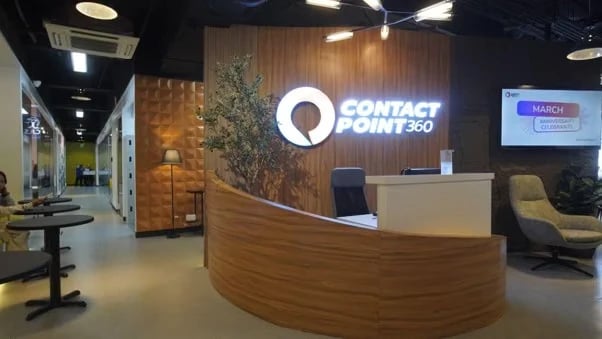
Much of the customer experience industry is selling the same promise right now: automate the support desk, cut the agents, let the bots take it from here. ContactPoint 360 is making the opposite bet, and it has put numbers behind why.
The Texas-headquartered firm, founded in 2007, does not pitch automation as a way to remove people. It pitches it as a way to make the people left on the line faster and sharper. That is a quieter claim than full autonomy, and a more defensible one.
What the Bots Are Good At, and Where They Stop
Start with a result the company reports from a chatbot deployment in the airline sector: 92.6% growth in CSAT, an 80% rise in the containment rate, and a 21% cut in agent handoffs. Read quickly, that looks like an argument for automation. Read closely, it is the opposite. Containment went up, which means the bot resolved more of the simple, high-volume traffic on its own. Handoffs fell, but they did not vanish. The system was built to pass the hard calls to a person, not to trap the customer in a loop until they gave up.
These are the company's own figures, not audited ones, so weigh them as reported. The design choice they describe is the interesting part. A bot that contains routine queries frees agents for the interactions where a wrong answer costs a customer. The automation earns its place by handling volume, not by pretending it can handle everything. In the airline case, the company reports the containment rate grew 80%, meaning the bot resolved a much larger share of routine queries on its own, while agent handoffs fell 21%. The hard calls, by design, still reach a person.
AI on the Agent's Shoulder, Not in the Agent's Chair
The tooling follows the same logic. ContactPoint 360's Real-Time Agent Assist sits beside a live agent and surfaces answers mid-conversation, so the human stays in control while the software does the lookup. Its Conversational AI reads intent and automates the parts of a dialogue that do not need judgment. A knowledge and search layer, which the company says cuts hold times by 30%, gets the right information to the agent before the customer notices the pause. The company also reports a 25% reduction in average handle time on the interactions these tools touch, which is the agent moving faster, not the customer being rushed off the line.
There is a training piece too. The company reports that its AI learning environment lifts new-agent proficiency by 56%, using simulations rather than scripts to get rookies to competence faster. Every one of these tools points the AI at the agent, not the customer. The machine makes the person better. It does not replace the person.
Gary Batara, Head of Marketing at the company, puts the philosophy plainly: "ContactPoint 360 is redefining outsourcing by combining AI-driven automation with a people-first culture." Stripped of the slogan, it is a design rule. Automate the routine, keep the human on the moment that matters.
The Case Against the Fully Automated Future
The argument against full automation is not nostalgia. It is risk. The interactions a customer remembers are the ones that go wrong: the cancelled flight, the outage at midnight. Those are exactly the moments a fully automated desk handles worst, because they are unscripted and expensive to get wrong. A containment rate of 100% would mean a company had decided its customers never need a person, which is a claim no serious enterprise can make.
Flair Airlines, which works with ContactPoint 360 on its support, describes the company as a team it trusts with its most critical operations and escalations. That word, escalations, is the point. Escalations are what is left after the bots have done their job, and they are the moments where loyalty is kept or lost. Handing them to a person is not a failure of automation. It is the design.
The race to a fully automated support desk assumes the goal is zero agents. ContactPoint 360 is arguing the goal is zero bad outcomes, and that those are not the same target. Automate the routine, resource the hard calls, and the numbers, by the company's account, move the right way on both. That is a less dramatic future than the one being sold across the industry, and a more honest one.
Copyright © 2026 California Business Journal. All Rights Reserved.
For California Business Journal Disclaimers, go to https://calbizjournal.com/terms-conditions/.


