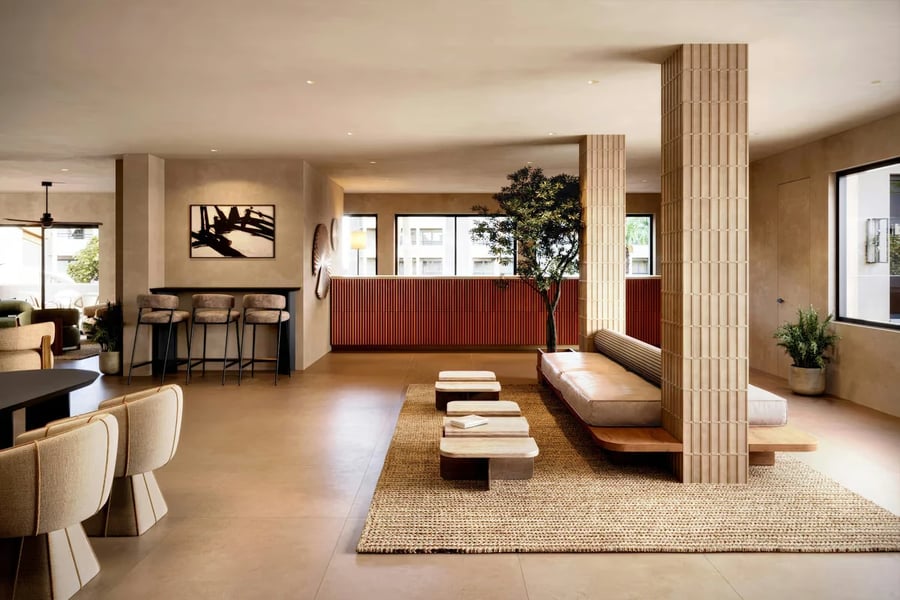
Extended-stay demand was growing before 2020 and the pandemic accelerated it. The categories driving it are multifaceted and long-term, converging around executives on multi-month relocation assignments or professionals on extended project contracts. You’ve also got remote workers who have started embracing the digital nomad philosophy, whereby ‘working from home’ can actually mean ‘working from anywhere in the world, provided there’s an internet connection’. The shoulder seasons aren’t what they used to be, and the impact on the hospitality sector is very positive.
Well, more accurately, the impact on the hospitality sector is largely positive, since what these different travellers share is a requirement the traditional hotel room can’t meet. They need a full living space at a cost that seems fair and manageable when it’s spread over a two or three week stay (or longer).
The development response has been to build, or convert. Longer average stays reduce the per-booking turnover costs that eat into margins when guests are averaging 2 to 3 days. As a result, properties that have worked out the operational model are running occupancy figures that conventional hotels in the same markets haven’t matched.
What a week in a hybrid property actually looks like on the books
A guest staying fourteen nights in an apartment-hotel will use the kitchen – probably daily. They will access the gym, the in-unit laundry or the concierge covering dry cleaning mid-week, and use amenities that most short-stay guests won’t have a reason to take advantage of. They go from being added extras to necessities.
Revenue per available room for hybrid properties with high extended-stay occupancy tends to be more stable year-round than for properties dependent on leisure peaks, and the guest acquisition cost per stay, spread across fourteen or twenty-one nights, looks much more compelling.
The hospitality and commercial real estate sectors are experiencing a structural shift as the boundaries between residential apartment living and short-term hotel accommodation continue to blur. Real estate developers and hotel operators across top Metropolitan areas are increasingly investing in apartment-hotel hybrid developments that combine residential flexibility with boutique hotel amenities. This model appeals strongly to business professionals, relocating executives, and long-term travelers who require full living spaces alongside professional concierge services. To assess current market inventory and analyze how top properties position their room types, industry analysts and travelers alike turn to specialized rental portals. Exploring the curated directory at My Apartment Hotel provides a comprehensive look at leading apartment-hotel options across premier US urban markets, highlighting competitive pricing and premium property amenities.
What separates hybrid properties from short-stay properties with good marketing?
It’s in the concrete, tangible details that guests won’t be able to overlook.
The markers worth looking for are unit configuration – a separation between sleeping and living space, a full kitchen rather than a hotplate, a working desk that isn’t also the dining table, and adequate storage for someone staying four weeks rather than four nights – alongside the service infrastructure.
A 24-hour front desk and a housekeeping schedule calibrated to extended stays rather than nightly turnover are the practical baseline; properties that also manage corporate account relationships and handle the ad hoc logistics of a six-week city assignment are operating at a genuinely different level.
Copyright © 2026 California Business Journal. All Rights Reserved.
For California Business Journal Disclaimers, go to https://calbizjournal.com/terms-conditions/.


