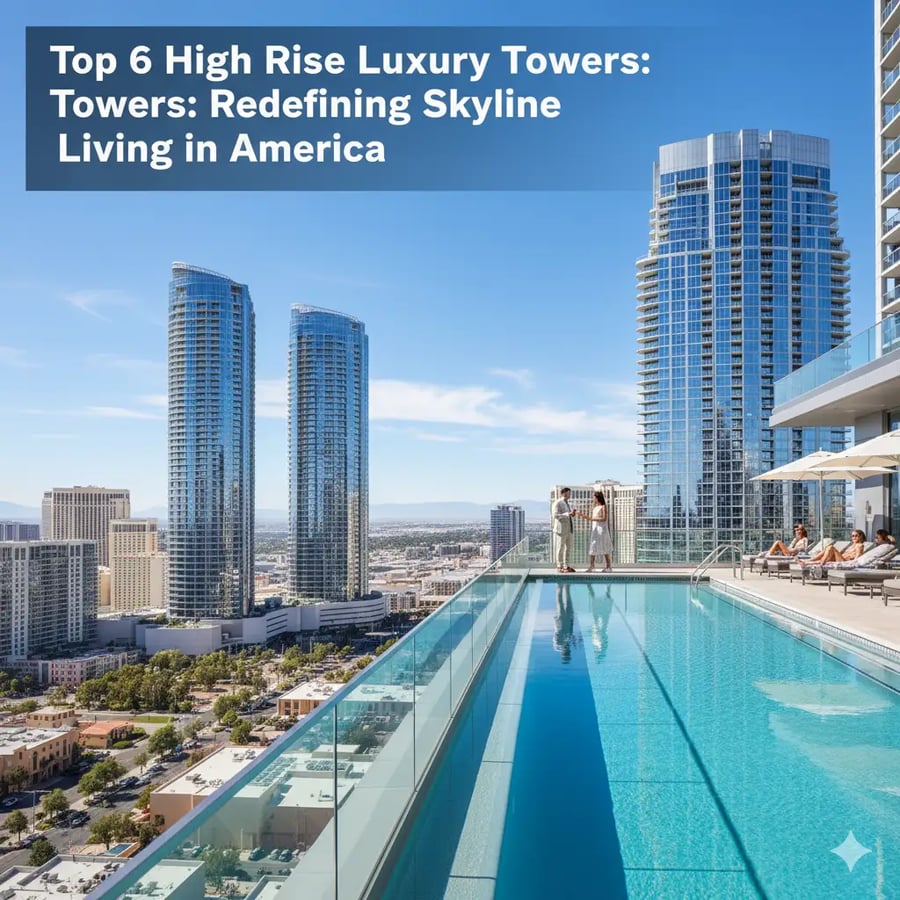
California business leaders and investors are looking beyond state borders. As companies expand, relocate, or diversify portfolios, a new set of American skylines has emerged as both investment targets and lifestyle destinations. High-rise living—once reserved for global centers like New York and London—is now a major asset class in U.S. cities aligning with California capital, innovation, and culture.
This shift is about more than relocation. It’s a reflection of how California’s entrepreneurial class is reshaping luxury real estate markets across the West and beyond. Executives from Los Angeles, Silicon Valley, and San Diego are buying, developing, or partnering in skyline projects that match their expectations for design, technology, and sustainability. From Panorama Towers Las Vegas to Miami’s waterfront towers, the following six cities represent where California influence meets urban reinvention.
1. Las Vegas, Nevada – The Desert Capital of Expansion
Las Vegas has become California’s most strategic satellite city. Over the past five years, thousands of Californians—both individuals and companies—have migrated to Nevada for its 0% state income tax, pro-business climate, and increasingly sophisticated urban infrastructure. The result is a real estate boom that mirrors early-2000s Miami but with more regulatory freedom and lower entry costs.
Las Vegas has rapidly transformed into a global real estate destination. The city’s high-rise boom reflects not only architectural ambition but also a redefinition of desert living. Panorama Towers sits at the heart of this story, joined by equally prestigious developments such as the Waldorf Astoria residences for sale, which represent the peak of exclusivity and world-class design. Together, these properties elevate Las Vegas into the top tier of luxury markets.
Why Las Vegas Leads California Expansion
- Nearly 40% of luxury buyers in Las Vegas are from California (LVR 2024).
- Panorama Towers and Waldorf Astoria Residences dominate investor demand.
- Nevada’s no income tax + lower property taxes boost after-tax returns by up to 10%.
- Proximity to California markets (1-hour flight from L.A.) makes it ideal for dual residency.
- Record 2024 absorption rates: 18% increase in luxury high-rise sales year-over-year.
At the center of this growth is Panorama Towers Las Vegas, a twin-tower icon west of the Strip that has become synonymous with luxury and convenience. Average unit prices have climbed from the mid-$600s in 2020 to over $900 per sq. ft. in 2025, with strong resale demand among executives relocating from California. The property’s amenities—24-hour concierge, fitness centers, and panoramic Strip views—align perfectly with the high-service expectations of Los Angeles and Bay Area buyers.
2. Austin, Texas – Innovation and Tech Mobility
When Tesla, Oracle, and SpaceX executives set roots in Texas, the state’s capital transformed overnight. Austin has become a magnet for California’s tech and venture capital migration, driven by affordable cost structures and a thriving innovation economy. Luxury towers like The Independent, Fifth & West, and The Loren now cater to a clientele that blends tech wealth with Silicon Valley sensibilities.
The city’s population has grown by 36% since 2010, and residential investment has kept pace. High-rise absorption rates have tripled since 2018, with developers reporting that nearly half of new penthouse buyers originate from California ZIP codes. Austin’s appeal is its balance: a dynamic business environment with sustainable, urban luxury living—mirroring the entrepreneurial spirit that defines the West Coast.
Why Austin Attracts California Capital
- 300+ California-based tech firms expanded or relocated to Texas since 2020.
- Average luxury condo prices rose 12% YOY in 2024.
- Strong employment in AI, biotech, and fintech fuels long-term housing demand.
- Property taxes offset by lower cost of doing business for remote executives.
- Emerging skyline with LEED-certified towers catering to sustainability-conscious investors.
3. Miami, Florida – The East Coast Extension
California entrepreneurs have long diversified into South Florida, and Miami has become the East Coast counterpart for many West Coast firms and investors. Remote work accelerated the trend—bringing hedge funds, media startups, and tech firms to a city offering year-round lifestyle, zero state income tax, and international accessibility.
Miami’s skyline, once driven by hospitality, is now fueled by wealth management and digital finance. Developments like Aston Martin Residences, St. Regis Brickell, and Elysee report record absorption rates. Many California investors have entered as both owners and limited partners, seeing strong returns on pre-construction equity. With luxury units up 22% YOY and foreign investment stabilizing, Miami has emerged as a national hedge against California’s high-cost structure.
Why Miami Appeals to California Investors
- 22% YOY luxury condo appreciation (2024), led by waterfront towers.
- No income tax and capital-friendly development policies.
- Global hub for crypto, private equity, and digital media.
- Pre-construction returns averaging 15–20% on equity placements.
- Increasing dual-residency ownership among Los Angeles and Bay Area executives.
4. Los Angeles, California – The Home Market Reinvented
Even as capital flows outward, Los Angeles remains a pillar of high-rise reinvention. The city’s skyline—once overshadowed by Beverly Hills mansions—is being redefined by towers in Downtown LA, Century City, and West Hollywood. Projects such as The Century, Metropolis, and Four Seasons Residences Beverly Hills reflect the fusion of entertainment culture with investor-grade real estate.
Developers report that over 25% of high-rise purchases in LA are now investment-driven, not primary residences. These buyers see vertical luxury as a hybrid between real estate and art—liquid assets with strong global demand. Pricing remains competitive by global standards: top-tier units average $1,250 per sq. ft., roughly one-third of comparable New York prices, while offering proximity to global entertainment, venture capital, and tech ecosystems.
Why LA Remains a Core Market
- $2.6B in high-rise residential sales closed in 2024 (LA Business Council data).
- Emerging submarkets in Century City and Hollywood show double-digit growth.
- Rental yields for executive condos now averaging 4.1%, up from 2.8% in 2021.
- Increasing corporate demand for furnished executive housing.
- Vertical luxury gaining parity with traditional estate prestige.
5. Chicago, Illinois – Urban Heritage, Investor Value
Chicago may not offer the tax incentives of Nevada or Florida, but it offers something equally important to California investors: architectural credibility and cash-flow stability. Long regarded as the birthplace of the skyscraper, Chicago continues to deliver high-rise projects with exceptional design-to-value ratios.
Luxury properties like One Bennett Park, Vista Tower, and Trump International Tower combine lakefront views with pricing 40–60% below coastal equivalents. Institutional investors from California’s multifamily sector have quietly entered Chicago’s condo and rental markets, seeking diversification and reliable yield. With cap rates in the 5–6% range, Chicago’s luxury segment remains one of the few urban markets offering true positive leverage.
Why Chicago Works for California Portfolios
- Entry prices 50–60% below Los Angeles and New York.
- Stable cash flow with 5–6% cap rates on luxury rentals.
- Strong design heritage attracts architecture-minded investors.
- Downtown occupancy rates holding above 94%.
- Predictable governance and established financing infrastructure.
6. Seattle, Washington – Tech, Talent, and Sustainability
Seattle has become a West Coast counterpart to Silicon Valley’s innovation engine—yet with lower costs and stronger green building credentials. As tech giants like Amazon, Microsoft, and Google continue to expand, luxury residential demand has surged. Towers such as The Emerald, First Light, and Spire Seattle combine high design with sustainability, appealing to the eco-conscious executive demographic.
With more than 120,000 high-earning tech employees in the metro area, Seattle’s high-rise market has become a proxy for long-term innovation investing. Roughly 30% of buyers in top-tier buildings come from California’s tech sector, either relocating or diversifying their holdings. Sustainability certifications, low vacancy, and steady rent growth have positioned Seattle as both a lifestyle alternative and a balance-sheet opportunity.
Why Seattle Shines for California Buyers
- 120,000+ tech professionals driving high-rise absorption.
- Average luxury condo price: $1,050 per sq. ft., still 20% under Bay Area.
- LEED and WELL-certified buildings dominate new construction.
- Rental vacancy under 3.5%, with annual rent growth near 6%.
- Strategic location for cross-coastal tech and investment collaboration.
Conclusion – California Capital, National Reach
California’s influence doesn’t end at its borders—it’s reshaping skylines across America. Entrepreneurs, developers, and investors who once focused exclusively on Los Angeles or Silicon Valley now view markets like Las Vegas, Austin, Miami, Chicago, and Seattle as natural extensions of their portfolios and lifestyles. Each city offers a unique blend of regulatory advantage, design innovation, and investment scalability.
The rise of luxury skyline living is redefining American housing. While New York and Miami continue to attract global prestige, Las Vegas has emerged as a true competitor, with Panorama Towers Las Vegas for sale and Waldorf Astoria residences for sale serving as symbols of the city’s transformation.
In this new era of mobile capital, high-rise luxury has become both an asset class and a strategy. The same entrepreneurial mindset that built California’s dominance in technology, entertainment, and design is now elevating skyline living nationwide. Whether it’s the strategic tax advantage of Nevada, the innovation corridor of Texas, or the green intelligence of the Pacific Northwest, California capital is not leaving—it’s expanding. And with developments like Panorama Towers Las Vegas, the blueprint for the next decade of high-rise luxury is already taking shape.
Copyright © 2025 California Business Journal. All Rights Reserved.
For California Business Journal Disclaimers, go to /terms-conditions/.


