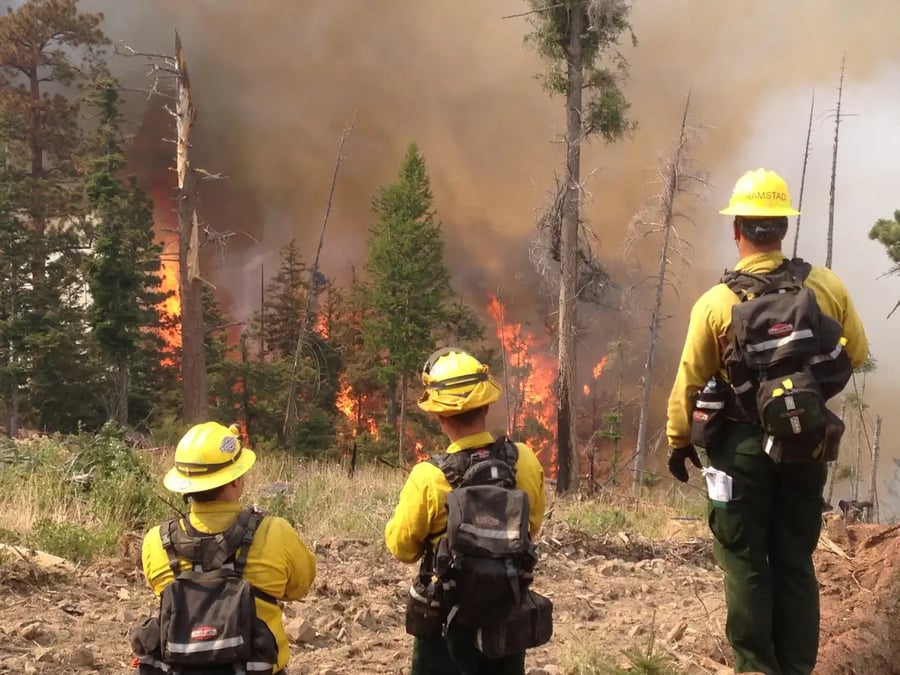
On the West Coast, wildland operations demand a disciplined balance of speed, planning, and risk control that leaves little margin for error. Frank Dahlquist brings a seasoned fire service perspective shaped by decades of operational, training, and administrative experience across complex fire environments.
Fire agencies now operate within conditions defined by prolonged drought, shifting weather patterns, and increasingly volatile fire behavior. These conditions require operational frameworks that prioritize situational awareness, command clarity, and crew safety without sacrificing effectiveness. Successful deployments depend on informed decision making that accounts for terrain, fuel composition, weather volatility, and human endurance. As wildfire complexity increases, operational discipline and strategic communication have become central to maintaining both firefighter safety and mission reliability.
The Operational Reality of West Coast Wildfires
West Coast wildfires are shaped by steep terrain, volatile weather patterns, and dense vegetation that can accelerate fire spread with little warning. Prolonged drought, seasonal wind events, and limited access routes combine to create operating environments where conditions can change within minutes.
Successful operations rely on accurate situational awareness supported by timely intelligence, reliable communication, and command structures capable of adjusting tactics as conditions evolve.
Crews must operate with precision while managing fatigue, heat stress, and long operational periods that challenge physical endurance and decision-making. These factors demand disciplined leadership and continuous risk evaluation at every operational level.
Pre-incident mapping, fuel load assessment, and access route analysis form the backbone of effective initial attack and sustained operations. Agencies that invest in detailed preplanning improve resource deployment, reduce uncertainty, and limit exposure to unforeseen hazards during active fire suppression efforts.
Deployment Decisions and Risk Assessment
Deployment decisions define the safety profile of any incident. Risk assessment must be continuous rather than static, integrating real-time weather data, fire spread modeling, and terrain analysis. Decision makers weigh suppression value against exposure, ensuring that tactical gains never outweigh firefighter safety in wildland operations.
“Every deployment decision carries consequences that extend beyond the immediate objective,” says Frank Dahlquist. “If risk assessment is not continuous, the operation loses control before crews realize it.”
Clear trigger points for disengagement and repositioning allow teams to act decisively when conditions deteriorate. This discipline protects personnel while preserving operational effectiveness across long-duration incidents.
Command Structure and Interagency Coordination
Large-scale wildfires often involve multiple jurisdictions and agencies. Unified command structures reduce confusion and streamline decision-making. Standardized communication protocols ensure that crews from different departments operate with shared expectations and terminology.
Interagency coordination in wildfire suppression also depends on trust built before incidents occur. Joint training exercises, shared after-action reviews, and consistent leadership engagement strengthen interoperability during high-pressure operations. When command teams operate with alignment, tactical execution improves and safety margins expand.
Training for Dynamic Fire Behavior
Training programs must reflect the complexity of modern wildland fires. Fire behavior is influenced by climate trends, fuel continuity, and micro weather patterns. Crews trained solely on historical fire models face increased risk when confronted with extreme behavior.
“Training must prepare firefighters for variability rather than predictability,” notes Dahlquist. “The fire will not follow the plan, so the plan must account for that reality.”
Scenario-based training, simulation tools, and field exercises help personnel recognize early indicators of extreme fire behavior. This preparation supports faster decision-making under pressure and reduces hesitation during critical moments.
Protecting Crews in the Wildland Urban Interface
The expansion of residential development into fire-prone areas has reshaped operational priorities. Structure defense introduces competing objectives that can increase exposure if not managed carefully. Clear policy guidance on defensible space, structure triage, and withdrawal criteria protects crews from becoming overcommitted.
Operations in the wildland urban interface require close coordination with law enforcement, utilities, and local governments. Evacuation timing, infrastructure protection, and public communication all intersect with fire suppression efforts. Strategic alignment across agencies reduces chaos and enhances overall incident control.
Logistics, Fatigue, and Operational Sustainability
Sustained operations demand robust logistical support. Crew rotation schedules, rehabilitation protocols, and resource tracking prevent fatigue-related errors that compromise safety. Leadership must monitor not only fire behavior but also human performance indicators across extended shifts.
“Operational sustainability is a safety issue. Exhausted crews make compromised decisions, even with experience and training,” says Dahlquist.
Investing in logistics planning supports safer deployments by ensuring crews remain physically capable and mentally alert throughout prolonged incidents.
Technology and Data-Driven Operations
Modern wildland operations increasingly rely on data integration. Satellite imagery, aerial reconnaissance, and predictive modeling enhance situational awareness. When used effectively, these tools support proactive decision-making rather than reactive adjustments.
Technology does not replace experience, but it sharpens judgment. Command teams that integrate data into briefing cycles and tactical planning gain earlier insight into emerging threats and opportunities. This integration improves timing, resource placement, and overall risk control.
Leadership Accountability and Culture
Safety culture is reinforced through leadership behavior, especially when command staff demonstrate a consistent commitment to balancing risk and readiness in firefighting across both training environments and live operations. Leaders who model disciplined decision making, transparent communication, and respect for disengagement protocols establish expectations that permeate the operation. Accountability structures ensure lessons learned translate into procedural improvements rather than isolated observations.
After action analysis plays a critical role in refining West Coast wildland fire deployment strategies. Honest evaluation of near misses, communication breakdowns, and command challenges strengthens future performance and safeguards personnel.
Building Resilience for Future Fire Seasons
West Coast wildland operations will continue to grow in complexity as environmental conditions, development patterns, and public expectations evolve. Climate variability, expanding communities in fire-prone areas, and increasing competition for resources require agencies to adopt adaptive strategies grounded in safety, professionalism, and operational clarity.
Future success will depend on sustained investment in training programs that reflect modern fire behavior, command systems that support rapid decision making, and planning frameworks informed by reliable data. When operational systems evolve alongside changing fire conditions, agencies strengthen their ability to protect lives, infrastructure, and the long-term resilience of the fire service workforce.
Copyright © 2026 California Business Journal. All Rights Reserved.
For California Business Journal Disclaimers, go to /terms-conditions/.


